Best AI Tools for Personal Trainers to Grow Their Fitness Business in 2026
Last updated: June 2026 | 10 tools reviewed | Pricing verified
Introduction
You spend your day on your feet. Coaching squats. Counting reps. Correcting form. Being present and energetic for every single client, even when you are running on four hours of sleep because you had a 5am session.
Then the day’s training is done, and the second job starts. Programming next week’s workouts. Responding to the client who texted about their shoulder pain. Posting something on Instagram because you have not posted in five days, and the algorithm punishes silence. Sending an invoice to the client who is three weeks behind on payment. Trying to figure out why your client retention dropped last month.
Nobody becomes a personal trainer because they love admin work. You became a trainer because you love coaching, love seeing people get stronger, and love the relationship that forms when someone trusts you with their physical progress. The business side is the tax you pay to keep doing the part you actually love.
AI tools are quietly changing how much of that tax you have to pay. Not by replacing your coaching — nothing on this list replaces the part where you watch someone’s deadlift form and know exactly what cue will fix it. What these tools do is take the programming repetition, the marketing grind, and the admin chaos off your plate so you have more hours and more energy left for the clients in front of you.
This article covers ten tools that actually fit how a working trainer operates — not generic business software repackaged with an AI label.
The Personal Trainer Workload Nobody Talks About
What Happens Before and After Every Session
A one-hour session with a client is rarely just one hour. There is the programming that went into building that session as part of a coherent plan. There is a check-in message before the session to confirm timing. There is note-taking during or right after the session to track what was done, which weights were used, and how the client responded. There is a follow-up message checking on soreness or progress. There is a program adjustment based on how that session went.
Multiply this across fifteen or twenty clients a week, and the invisible hours add up to roughly as much time as the actual training sessions themselves.
Why Independent Trainers Feel Like They Are Running Three Jobs
If you are independent — not employed by a gym that handles scheduling, billing, and marketing for you — you are simultaneously a coach, a marketer, and a small business owner. Most trainers were trained in exercise science, not in social media strategy or invoice management. The skills that make someone a great coach have nothing to do with the skills required to run the business side of coaching, and most trainers are learning the business side through trial and error while also trying to train clients well every single day.
The Tools — Grouped by What They Actually Help You Do
Programming and Client Progress
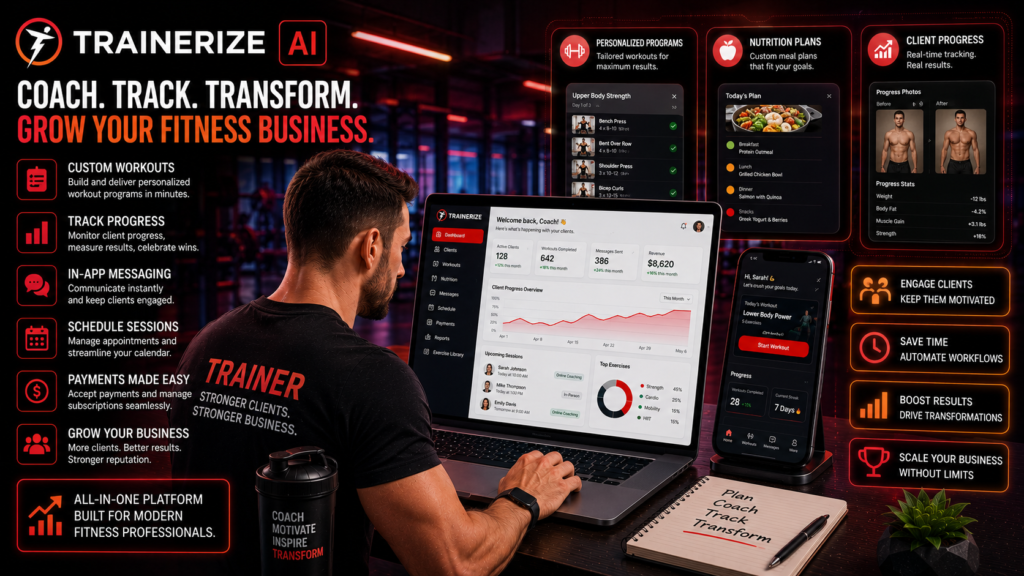
Trainerize — Your Entire Client Programming System in One App
Trainerize is one of the most established platforms built specifically for personal trainers, and its AI features in 2026 have made it significantly more capable than the basic workout-logging app it started as.
The platform lets you build workout programs once and assign them to multiple clients with adjustments for their specific levels. Clients follow their program through the app — seeing video demonstrations, logging their weights and reps, and tracking progress automatically. The AI features include automated progress reporting that flags when a client is plateauing or when their adherence is dropping, which gives you the chance to intervene with a program adjustment or a check-in conversation before the client gets frustrated and quietly disappears.
The habit coaching features go beyond just exercise — tracking sleep, water intake, and daily habits that affect a client’s results outside the gym. For trainers who want to coach the full picture rather than just the workout, this extends your value without extending your hours, since the app handles the daily check-ins automatically.
What it helps with: Client programming, progress tracking, and automated check-ins Free option: Free trial Monthly cost: From $5/month per client (Grow plan) Time saved: 3 to 5 hours per week on programming and progress tracking for trainers with 10+ clients
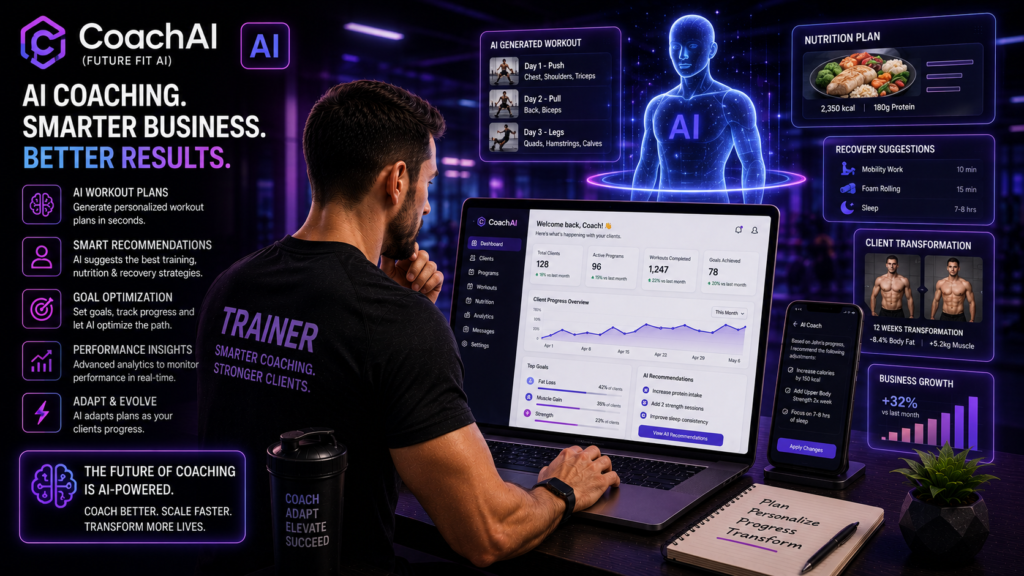
CoachAI — Generating Personalized Workout Plans in Minutes
Building individualized programs for every client is what separates real coaching from a generic plan pulled off the internet. It is also one of the most time-consuming parts of the job when done from scratch for each person.
CoachAI generates personalized workout programs based on a client’s goals, experience level, available equipment, injury history, and time constraints. You input the client’s specifics, and the AI produces a structured multi-week program with progression built in. You are not handing this directly to the client unedited — you are using it as a strong starting point that you then adjust based on your professional judgment about that specific person.
For trainers managing a growing client roster where building every program completely from scratch is not sustainable, this cuts initial programming time significantly while still letting you apply the expertise that makes you worth hiring.
What it helps with: Generating first-draft personalized programs quickly Free option: Limited free tier Monthly cost: From $19/month Time saved: 1 to 2 hours per new client program built
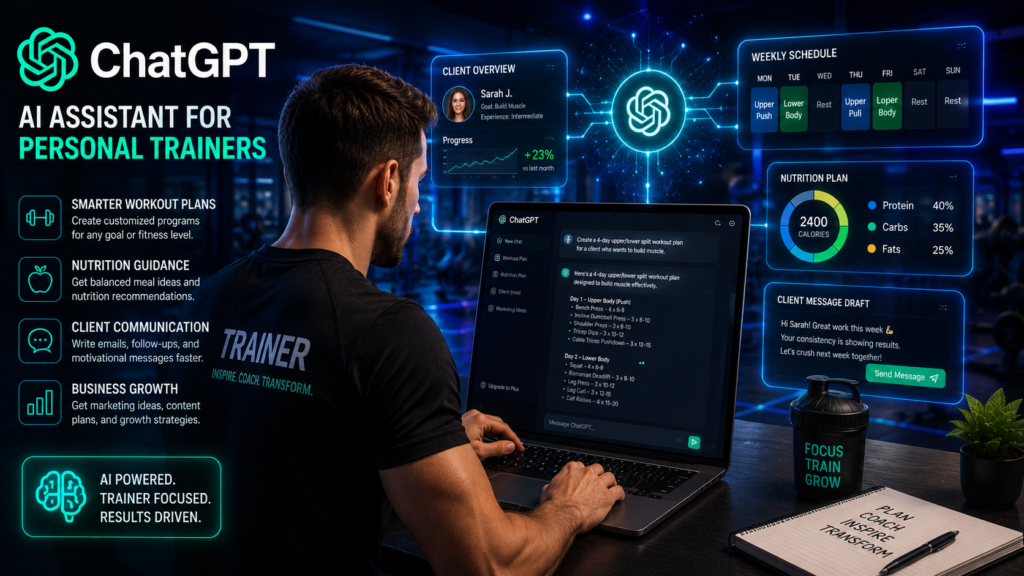
ChatGPT — The Backup Brain for Programming Ideas and Client Questions
Every trainer hits the same wall occasionally. You have a client with a specific limitation — a previous injury, a mobility restriction, a piece of equipment they do not have access to — and you need exercise alternatives quickly. ChatGPT functions as a fast brainstorming partner for exactly this situation.
Beyond programming ideas, ChatGPT handles the written communication that surrounds coaching — client check-in messages, educational content explaining why a particular exercise matters, responses to common client questions about soreness or plateaus, and the social media captions and email content covered later in this article.
The same caution applies here as with any client-facing health guidance: ChatGPT is a thinking and writing tool, not a substitute for your professional judgment about a specific client’s body and history.
What it helps with: Programming alternatives, client communication, educational content Free option: Yes Monthly cost: $20/month (Plus plan) — free plan handles most of this Time saved: 30 to 60 minutes per week on communication writing
Nutrition Guidance
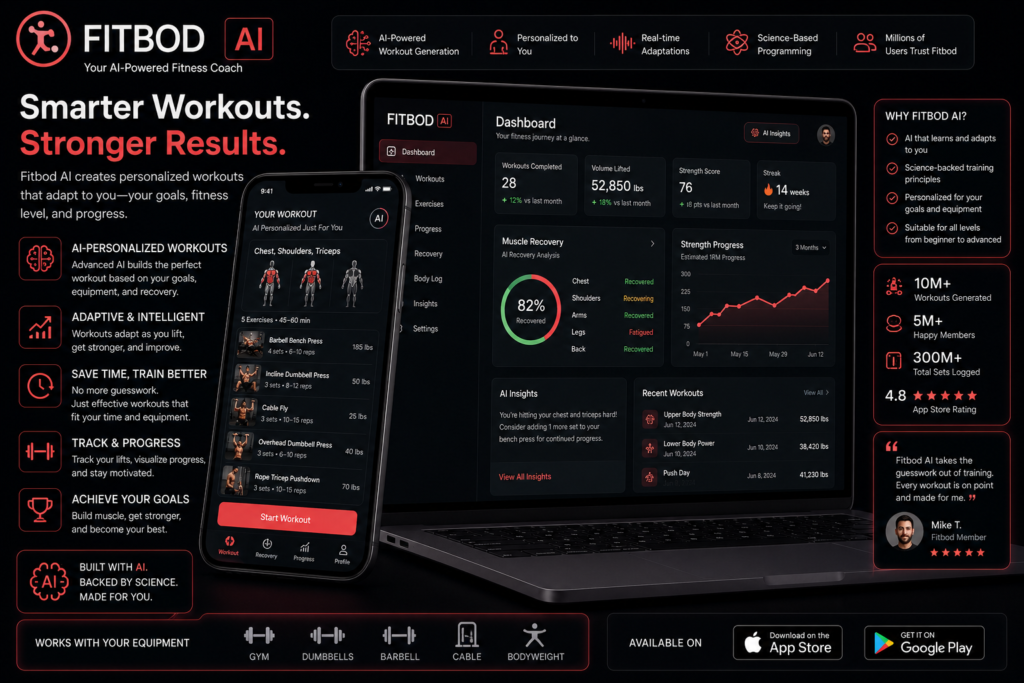
Fitbod AI — Smart Programming and Nutrition Insights Combined
Fitbod uses AI to generate workout programs that adapt based on a client’s logged performance, available equipment, and recovery patterns — and it has expanded into AI-powered nutrition guidance that connects directly to the training data rather than functioning as a separate logging app.
The AI tracks what muscle groups have been trained recently and adjusts upcoming session recommendations to balance recovery and progression automatically. On the nutrition side, its AI analyzes a client’s logged meals alongside their training intensity and recovery data, flagging patterns like consistently under-eating protein on heavy training days or inconsistent calorie intake that could be affecting performance and recovery.
For trainers who want nutrition awareness that is actually informed by what is happening in the gym rather than a generic calorie tracker running in isolation, Fitbod connects the two in a way MyFitnessPal does not.
What it helps with: AI-adjusted programming combined with training-aware nutrition insights
Free option: 7-day free trial
Monthly cost: $12.99/month or $79.99/year
Important note: Same caution applies — this supports general awareness, not clinical nutrition counseling. Refer clients with medical or disordered eating concerns to a registered dietitian.
Marketing and Content
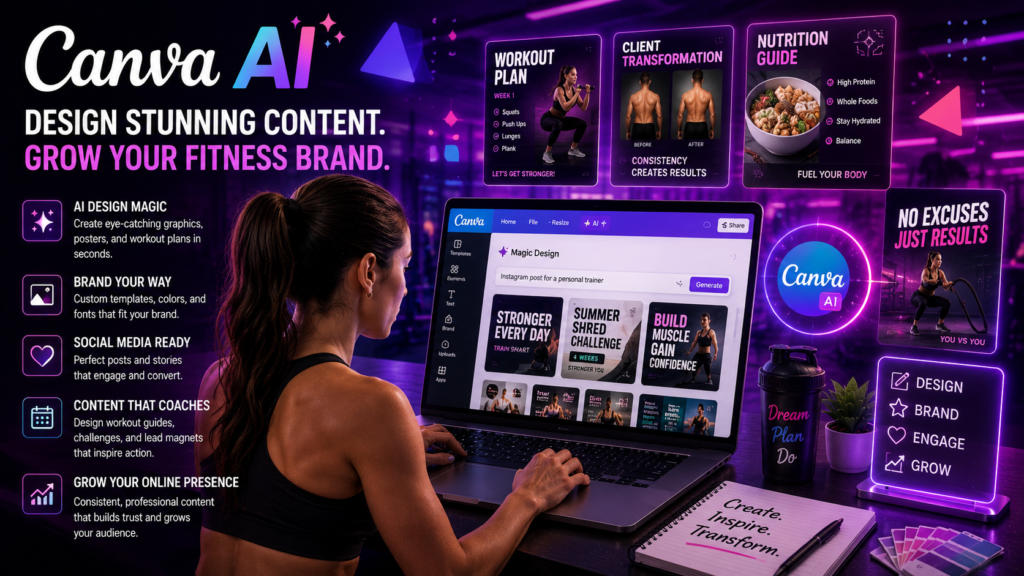
Canva AI — Branded Content That Makes You Look Like a Real Business
A trainer’s Instagram and the materials they share with clients say a lot about how seriously potential clients take them. A blurry phone screenshot of a workout plan looks amateur. A clean, branded PDF with your logo and consistent colors looks like a real business worth paying premium rates for.
Canva AI’s templates and brand kit let you produce client workout PDFs, social media posts, before-and-after graphics, and promotional materials that look professionally designed without hiring a designer. The AI design suggestions adapt to your uploaded photos and brand colors automatically.
What it helps with: All visual marketing and client-facing materials Free option: Yes — generous free tier Monthly cost: $15/month (Pro plan) Time saved: 2 to 3 hours per week on content creation
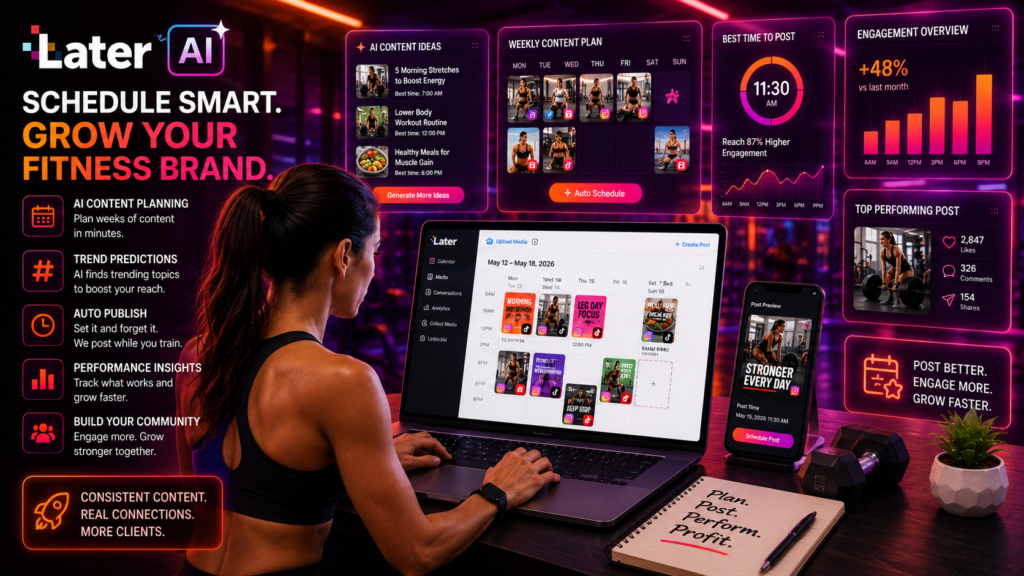
Later AI — Staying Consistent on Social Media Without Daily Effort
Social media is one of the main ways trainers attract new clients in 2026, and it is also the first thing that gets dropped when the week gets busy. Later lets you batch-create a month of content during a slower period and schedule it to post automatically, with AI-generated caption suggestions based on a brief description of each post.
What it helps with: Consistent social media presence without daily time investment Free option: Yes — limited posts per month Monthly cost: From $25/month Time saved: 1 to 2 hours per week
Client Communication and Community
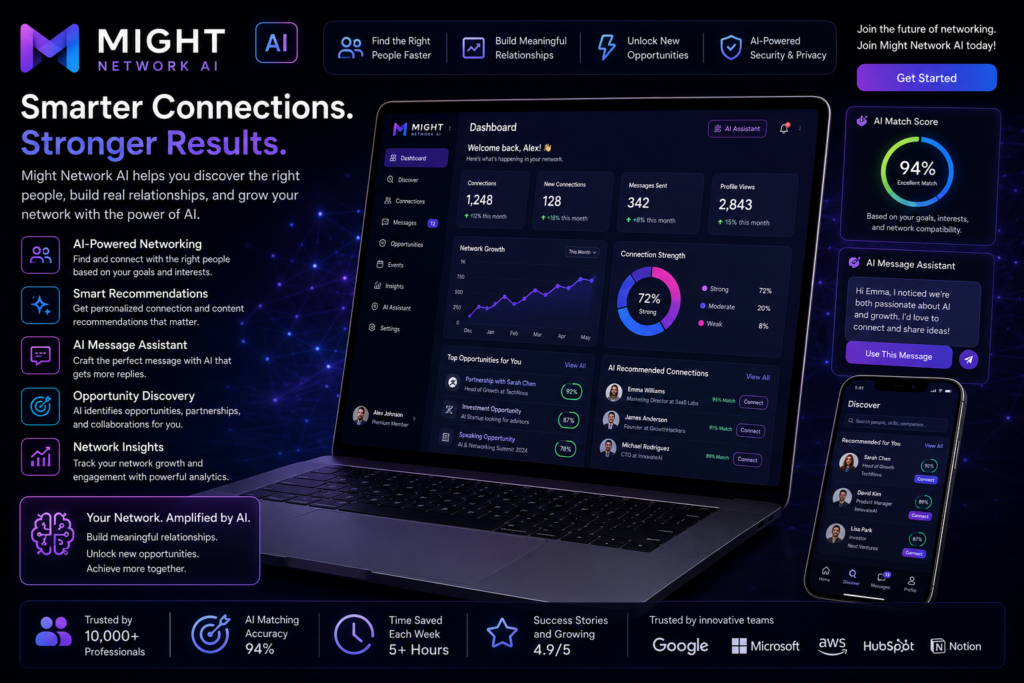
Mighty Networks AI — Building a Paid Community Around Your Coaching
For trainers moving beyond one-on-one sessions into group coaching or membership-based models, Mighty Networks lets you build a branded community space where clients access content, participate in challenges, and support each other. The AI features help generate community engagement prompts and identify members who are going quiet so you can re-engage them before they cancel.
What it helps with: Scaling beyond one-on-one through group and membership coaching Free option: Trial available Monthly cost: From $39/month Best for: Trainers building group programs or paid online communities
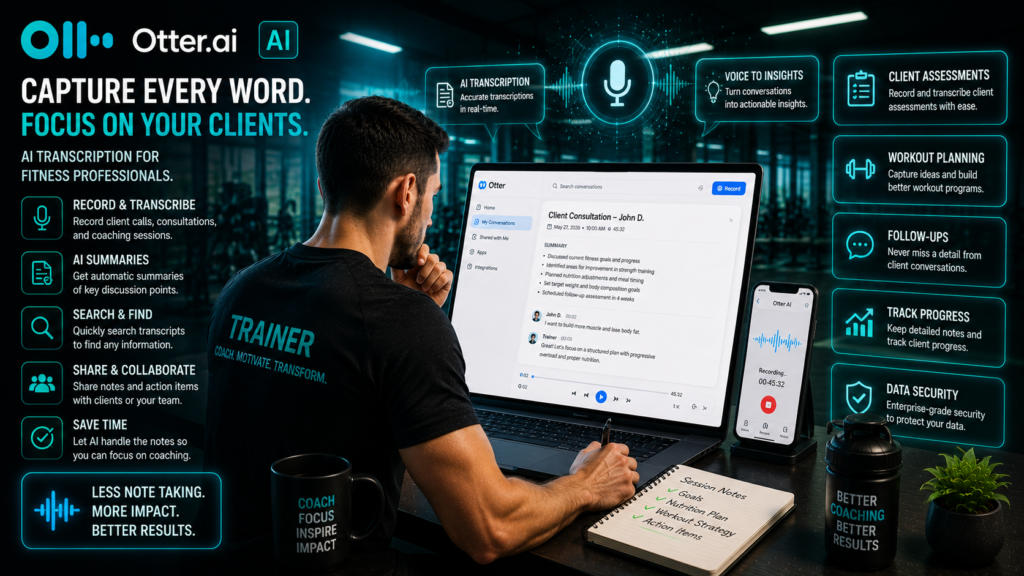
Otter.ai — Capturing Every Detail From Client Assessments
Initial client consultations and movement assessments contain a lot of important information — injury history, goals, lifestyle factors — that is easy to half-remember a week later when you sit down to build their program. Otter.ai transcribes and summarizes these conversations automatically, giving you a searchable record to build the program from accurately.
What it helps with: Accurate records of client intake and assessment conversations Free option: Yes — limited minutes Monthly cost: $16.99/month (Pro plan)
Business and Admin
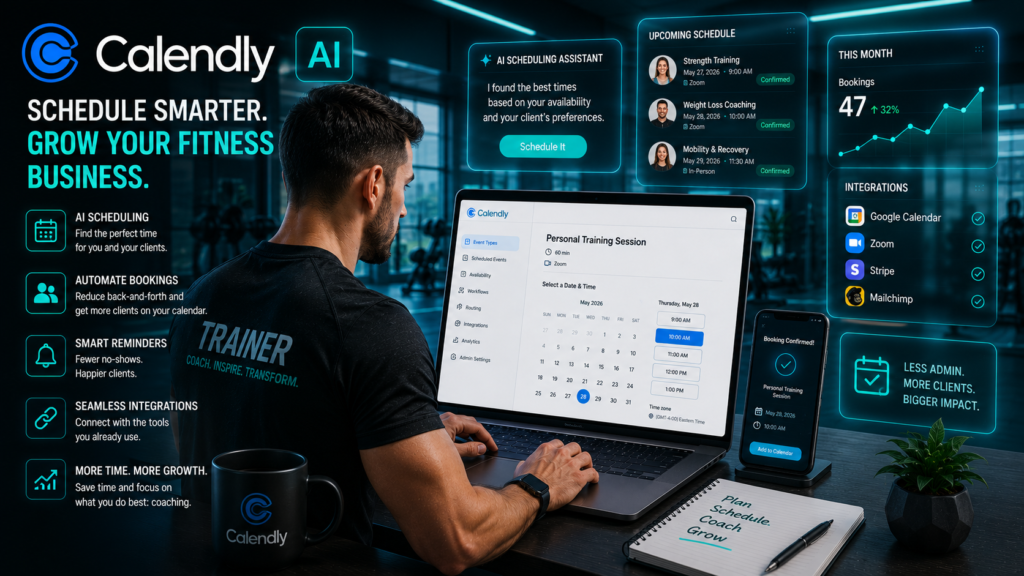
Calendly AI — Ending the Back and Forth of Booking Sessions
Texting back and forth to find a session time wastes time you could spend training someone. Calendly lets clients book directly into your available slots, sends automated reminders, and handles rescheduling without your involvement.
What it helps with: Session scheduling and reminders Free option: Yes Monthly cost: $10/month (Standard plan)
QuickBooks AI — Getting Paid and Staying Organized at Tax Time
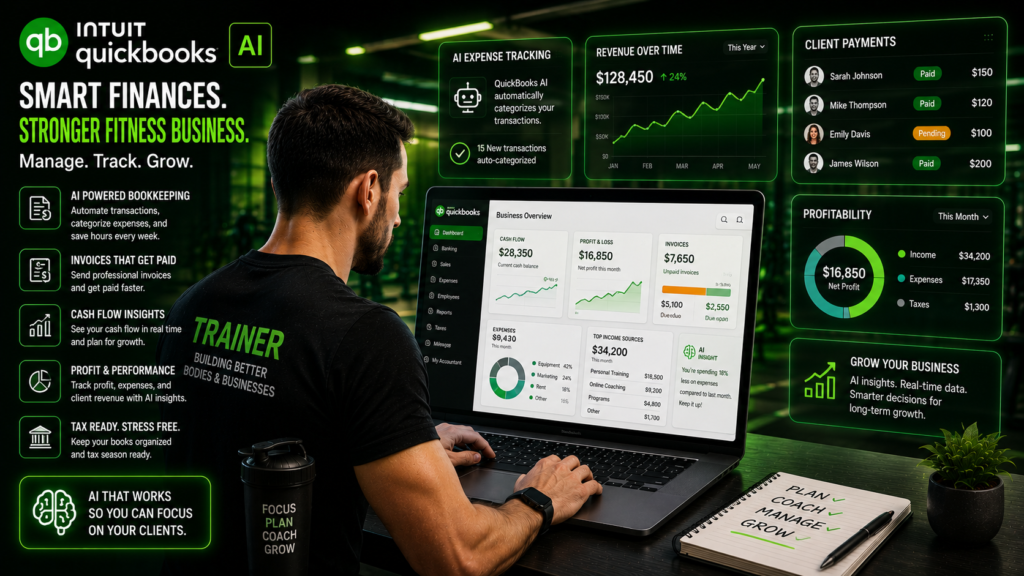
Independent trainers juggling multiple clients on different payment schedules need a system more reliable than a mental note. QuickBooks automates invoicing, tracks income and expenses, and organizes everything for tax season so you are not scrambling through a year of bank statements every spring.
What it helps with: Invoicing, expense tracking, and tax preparation Free option: 30-day trial Monthly cost: From $30/month
What It Actually Costs
| Tool | What It Helps With | Free Option | Monthly Cost | Time Saved |
| Trainerize | Programming and progress tracking | Trial | From $5/client | 3 to 5 hrs/week |
| CoachAI | Personalized program generation | Limited | From $19 | 1 to 2 hrs/program |
| ChatGPT | Communication and programming ideas | Yes | $20 | 30 to 60 min/week |
| Fitbod | Adaptive programming + nutrition insights | Trial | $12.99 | 30-45 min/week |
| Canva AI | Marketing and client materials | Yes | $15 | 2 to 3 hrs/week |
| Later AI | Social media scheduling | Yes | From $25 | 1 to 2 hrs/week |
| Mighty Networks | Group coaching community | Trial | From $39 | N/A — enables scaling |
| Otter.ai | Client assessment notes | Yes | $16.99 | 30 min per intake |
| Calendly AI | Scheduling | Yes | $10 | 1 to 2 hrs/week |
| QuickBooks AI | Invoicing and finances | Trial | From $30 | 1 to 2 hrs/week |
Which Tools Fit Your Type of Training Business
Independent Trainers Working One on One
Trainerize for programming, Calendly for scheduling, QuickBooks for finances, Canva for materials. This covers the core operational needs without overbuilding for a business model that does not need group community features.
Online Coaches With Remote Clients
Trainerize for programming, Calendly for scheduling, QuickBooks for finances, and Canva for materials. This covers the core operational needs without overbuilding for a business model that does not need group community features.
Trainers Inside a Gym or Studio
Often, the gym handles scheduling and payment, so the priority shifts to ChatGPT for client communication and Canva for any personal branding content you produce, since you are likely building your own client base within the gym’s infrastructure.
Trainers Building Group or Membership Coaching
Mighty Networks becomes essential. Pair it with Canva for community content and ChatGPT for the educational material that keeps a membership engaged.
Being Honest About AI and Coaching
AI Can Build a Workout Plan — It Cannot Read a Room
CoachAI can generate a structured program in minutes. It cannot see that your client is favoring their left knee slightly today, or notice the hesitation in their voice when they say they are “fine” after a tough week. That observational skill is the actual coaching. The program is just the framework.
Why Client Relationships Are Still What Keeps People Paying You
Clients do not pay for a workout plan — they could get one for free online. They pay for accountability, encouragement, expertise applied specifically to them, and a relationship with someone who genuinely cares whether they show up. None of the tools on this list touch that. They just give you more time and energy to invest in it.
Where AI Programming Falls Short for Injuries and Special Populations
For clients with significant injuries, post-surgical rehabilitation needs, or complex medical considerations, AI-generated programs are not a substitute for your clinical judgment or for coordination with a physical therapist. Use AI tools for general fitness programming. Lean on your own training and professional referrals for anything medically complex.
Questions Trainers Actually Ask
Can AI create a personalized workout plan?
Yes, tools like CoachAI generate structured plans based on client goals, equipment, and limitations. Treat the output as a strong first draft that you review and adjust with your professional judgment, not a finished product to hand over unedited.
Will AI replace personal trainers?
No. AI handles programming templates and admin tasks. It cannot motivate someone through a hard set, correct form in real time, or build the trust that keeps a client showing up for months. The coaching relationship is the product, and that remains entirely human.
What is the best free AI tool for trainers?
ChatGPT’s free plan for communication and programming ideas, and Canva’s free plan for marketing materials. Together, they cover a meaningful amount of a trainer’s non-coaching workload at zero cost.
Can AI help me get more clients?
Indirectly. Canva and Later help you maintain a consistent, professional social media presence, which is one of the main ways trainers get discovered. None of these tools replaces the actual skill of converting an inquiry into a paying client — that still comes down to your communication and your reputation.
Is AI nutrition advice accurate enough to give clients?
For general pattern awareness — protein intake, calorie trends, hydration — yes, it is useful. For clients with medical conditions, eating disorders, or complex health needs, refer them to a registered dietitian. Stay within your scope of practice.
How do online coaches use AI differently than in-person trainers?
Online coaches rely more heavily on app-based programming tools like Trainerize since there is no in-person session to observe form directly, and they depend more on social media and content tools since remote client acquisition happens almost entirely online.
Conclusion
Pick one bottleneck. If programming every client from scratch is eating your evenings, try CoachAI or lean harder into Trainerize. If your social media has gone quiet because there is no time, set it up for later this week. If invoicing and chasing payments is the thing you dread most, QuickBooks solves that in an afternoon of setup.
Most trainers who try one tool and feel the time come back end up adopting two or three more naturally over the following months.
AI can build the plan. It cannot show up at 5am with energy for your client, notice the small things that matter, or build the kind of trust that keeps someone paying you month after month. That part is still entirely you.
For more honest AI tool reviews across every professional category, visit aitoolister.com.