
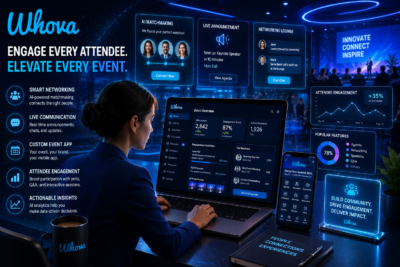
Whova✓
From Custom pricing
Conference and association organizers wanting an all-in-one event app with strong attendee networking and a la carte feature pricing
Anyone who has organised an event at scale knows how quickly the logistics multiply.
From Custom pricing
Conference and association organizers wanting an all-in-one event app with strong attendee networking and a la carte feature pricing
From Custom pricing
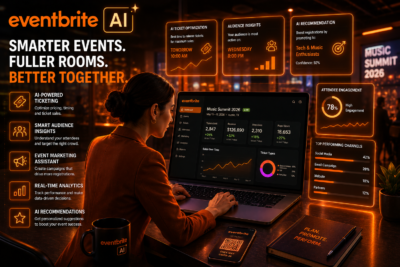
Event organizers wanting free event publishing on a large marketplace, with transparent per-ticket fees for paid events
Anyone who has organised an event at scale knows how quickly the logistics multiply. Registration pages, confirmation emails, speaker schedules, venue logistics, attendee communications, on-the-day check-in, and post-event follow-up — each one is manageable in isolation, but running all of them simultaneously while also trying to deliver an experience people actually enjoy is a different challenge. The coordination overhead of event planning is one of the main reasons it’s consistently ranked among the more stressful operational roles in any organisation. AI event planning tools exist to reduce that overhead without reducing the quality of what gets delivered.
AI event planning tools are software platforms that use artificial intelligence and automation to assist with the full lifecycle of event management — from promotion and registration through to attendee engagement, on-site logistics, and post-event analysis. They bring structure to a process that involves many simultaneous moving parts, helping organizers manage attendee data, communicate more effectively before and during events, streamline check-in, and understand what worked once it’s all over.
The capabilities these platforms offer vary by tool, but the most common applications include automated event registration and ticketing management, personalised attendee communication, AI-powered networking features that help attendees connect with relevant people before or during the event, event app functionality that keeps schedules and information accessible to everyone attending, real-time check-in management, and analytics that pull together attendance, engagement, and feedback data into a coherent picture of event performance. For virtual and hybrid events, platform features around live streaming, session management, and virtual networking become equally important.
The range of people and organisations using AI event planning tools is broad. Corporate event teams use them to manage conferences, product launches, and internal events across multiple locations and attendee groups. Association and membership organisations use them to run annual conferences and regional events with registration, session scheduling, and networking features that serve their communities. Nonprofits use them to manage fundraising galas and community events. Marketing teams use them to create branded event experiences that integrate with broader campaign workflows. Independent event planners use them to manage client events more professionally and with less manual effort. The scale ranges from a few dozen attendees to thousands, and the right tool depends heavily on which of these contexts applies.
When comparing AI event planning tools, several factors carry significant practical weight. The ease and flexibility of the registration and ticketing setup matters — particularly for events with multiple ticket types, discount codes, capacity limits, or complex registration flows. Attendee communication features, including email automation and in-app messaging, affect how well an organizer can keep attendees informed and engaged throughout the event lifecycle. For multi-day conferences, session scheduling tools, speaker management, and agenda-building features become important. Integration with CRM systems, email marketing platforms, and payment processors affects how data flows between your event tools and the rest of your marketing and operations stack. For larger events, scalability and the ability to support high registration volumes without performance issues matters. Pricing structures vary — some platforms charge per ticket or per attendee while others use flat subscriptions — which affects cost predictability depending on event frequency and size. Data privacy and the handling of attendee personal information deserve review, particularly for events collecting sensitive data or operating across different regulatory environments.
The AI event planning tools listed below cover a range of these capabilities for events of different types and scales. You can compare them directly by features, pricing model, event type fit, and integration support to find the platform that best matches how you plan and run events.
AI event planning tools are software platforms that use artificial intelligence and automation to assist with managing events — from registration and ticketing through to attendee communication, on-site logistics, networking, and post-event analysis. They help event organizers coordinate the many simultaneous tasks involved in running an event more efficiently, reduce manual administrative work, and improve the experience for attendees. The category covers tools for in-person, virtual, and hybrid events, and ranges from comprehensive event management platforms to more focused solutions for specific parts of the event workflow such as registration, check-in, or attendee engagement.
AI event tools improve attendee engagement through a combination of personalised communication, intelligent networking features, and accessible event apps. Before the event, automated communication keeps attendees informed and builds anticipation. During the event, AI-powered networking features analyse attendee profiles and suggest relevant connections, making it easier for people to meet others with shared interests or complementary needs. Event apps give attendees easy access to schedules, speaker information, and session updates in real time. After the event, automated follow-up and feedback collection maintains the connection while gathering insights that inform future planning.
Event management software is the backend platform organizers use to set up registration, manage attendee data, build schedules, communicate with participants, and analyse event performance. An event app is a mobile or web application that attendees use during the event — typically to access the agenda, receive notifications, connect with other attendees, and participate in sessions. Many comprehensive event platforms include both — a management interface for the organizer and an attendee-facing app experience. Standalone event apps also exist and can be integrated with a separate event management system if needed, though seamless integration between the two provides a more consistent experience.
Many can, though the depth of virtual and hybrid event support varies considerably between platforms. Tools built primarily for in-person events may offer limited virtual functionality, while platforms designed with hybrid events in mind typically include live streaming integration, virtual session management, online networking features, and separate registration flows for in-person and virtual attendees. If your events include a virtual or hybrid component, verifying that a platform’s virtual capabilities actually meet your needs — rather than just appearing on a features list — is worth doing before committing. Virtual event requirements can differ significantly between a small webinar and a large multi-session hybrid conference.
AI event tools typically provide check-in solutions that replace manual paper lists with digital workflows — QR code scanning through a mobile app, badge printing on arrival, or self-service kiosks that reduce queues and staff requirements at entry. These systems update attendance records in real time, giving organizers visibility into who has arrived and flagging no-shows. For multi-session events, check-in tools can also track session attendance individually, which is useful for reporting and for managing capacity in rooms with limited seats. The reduction in check-in friction is often one of the most immediately appreciated operational improvements for both staff and attendees.
Start by mapping the tool’s capabilities against the specific type of event you run — a large annual conference has different requirements from a series of small networking events or a fundraising gala. Registration flexibility, attendee communication features, and check-in management are practical starting points. From there, evaluate integration with your existing CRM, email, and payment tools, since disconnected systems create manual data work. Consider how pricing scales with your event frequency and attendee volume — per-ticket models work differently than flat subscriptions depending on how you operate. For events collecting attendee data, review the provider’s data handling and privacy practices. Ease of use matters when event staff with varying technical comfort levels need to manage the platform under time pressure.
Some tools in this category offer free plans or free tiers for events below a certain size or attendee count. Eventbrite, for example, has historically offered free access for free events, with fees applied to paid ticket sales. Whova and similar comprehensive platforms typically operate on a pricing model based on event size or features required. What’s available for free and at what limitations changes over time, so checking the current pricing page for any tool you’re evaluating gives you the most accurate picture. For smaller or occasional events, free tiers can be sufficient; for larger or recurring events, paid plans typically provide the capacity and features required.
Attendee data privacy is an important consideration because event registration collects personal information — names, email addresses, organisational details, and in some cases dietary requirements, accessibility needs, or payment information. Privacy practices vary between platforms, and compliance requirements depend on where attendees are located. Platforms operating in Europe must comply with GDPR; other regions have their own applicable regulations. Reputable event management platforms document their data handling practices and offer data processing agreements for organisational customers. Before deploying a platform for an event that collects attendee personal data, review the provider’s current privacy documentation and confirm it meets the requirements applicable to your attendee population and jurisdiction.