Beamery✓
From Custom pricing
Large enterprises that want a unified talent CRM, skills intelligence, and workforce planning platform instead of separate point tools
AI recruiting tools help hiring teams automate candidate sourcing, screening, matching, and other repetitive parts of talent acquisition.
From Custom pricing
Large enterprises that want a unified talent CRM, skills intelligence, and workforce planning platform instead of separate point tools
From Custom pricing
Enterprise recruiting and HR teams wanting to remove biased or ineffective language from job posts and performance reviews
From Custom pricing
Mid-market and enterprise talent teams needing deep, attribute-based candidate intelligence beyond keyword search
From $15/month
Small to mid-sized recruiting agencies and in-house teams wanting an affordable, AI-enabled applicant tracking system
From Custom pricing
Large enterprises that need skills-based talent matching, internal mobility, and workforce planning across the full employee lifecycle
From $2/month
Technical recruiters and talent acquisition teams needing deep, filterable search across a massive candidate database including GitHub and patent…
From Custom pricing
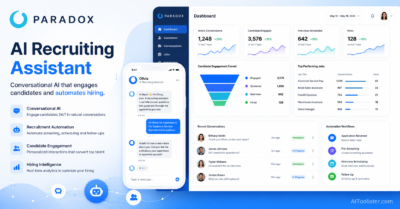
Large employers with high-volume, frontline hiring who want conversational AI to automate candidate screening and interview scheduling
From $149/month
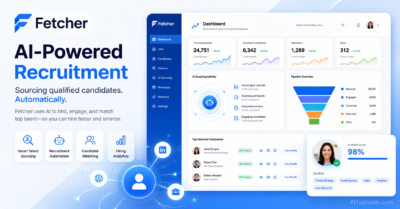
Recruiting teams that want AI-sourced, vetted passive candidates delivered to their inbox instead of manually searching a database
From Custom pricing
Large enterprises wanting a unified AI platform covering candidate attraction, recruiter productivity, and internal talent mobility
AI recruiting tools help hiring teams automate candidate sourcing, screening, matching, and other repetitive parts of talent acquisition. A single job posting for a mid-level role can generate hundreds of applications within the first week. A recruiter working a full desk of open positions doesn’t have time to read every one carefully — and yet the cost of missing a strong candidate, or advancing the wrong one, is significant. The volume problem in recruiting has been growing for years, and it’s one of the core reasons AI recruiting tools have moved from experimental to mainstream across HR functions of all sizes.
AI recruiting tools are software platforms that apply machine learning, natural language processing, and automation to the work of finding, evaluating, and hiring candidates. The category covers a wide spectrum of the recruitment workflow. At the top of the funnel, AI sourcing tools identify potential candidates from internal databases, LinkedIn, and other talent networks — surfacing profiles that match a role’s requirements without requiring a recruiter to run manual searches. Resume screening tools analyse incoming applications and rank or filter them based on fit criteria, reducing the volume a recruiter needs to manually review. Job description optimisation tools analyse the language in postings to identify terms that may deter qualified candidates or introduce unintentional bias. Candidate engagement platforms use AI-powered chatbots and messaging to maintain contact with applicants throughout the process. Interview tools use AI to structure, record, and in some cases evaluate candidate responses.
What makes these tools valuable to talent acquisition teams is the combination of speed and consistency they bring to tasks that are otherwise manually intensive and susceptible to human error. A recruiter screening resumes manually will inevitably be influenced by factors unrelated to job performance. AI screening tools apply consistent criteria across every application, which — when properly configured — can reduce the inconsistency that leads to missed candidates or poor hiring decisions. That said, the quality of AI-driven screening depends heavily on how the criteria are set up, and the risk of encoding existing biases into automated systems is a genuine concern that responsible buyers evaluate carefully.
The organisations and professionals benefiting from AI recruiting tools span a range of contexts. Enterprise talent acquisition teams use AI to manage high-volume hiring across multiple business units and geographies without proportionally scaling headcount. Mid-market companies use AI sourcing and screening tools to compete for candidates against larger organisations with bigger recruiting teams. Staffing and recruiting agencies use AI to increase the number of client mandates they can work simultaneously. HR generalists at smaller businesses use tools that automate the administrative overhead of recruitment so they can focus time on candidate relationships and hiring manager communication.
Choosing between AI recruiting tools requires thinking carefully about which part of the recruitment process needs the most support. A sourcing tool built for finding passive candidates serves a different purpose from one designed to screen inbound applications or automate interview scheduling. Integration with your existing ATS is a practical priority — a tool that doesn’t connect to the system your team already uses creates duplicate work and data fragmentation. For enterprise teams, scalability and the ability to support multiple hiring workflows simultaneously matters. Diversity and bias mitigation features are increasingly important evaluation criteria, and it’s worth examining how each provider approaches this rather than taking feature claims at face value. Data privacy and candidate data handling require careful review given the sensitivity of the personal information involved in recruiting. Ease of use affects adoption, particularly for tools that need to be used by hiring managers and HR generalists, not just experienced recruiters.
The AI recruiting tools listed below cover a range of these capabilities across sourcing, screening, engagement, and assessment. You can compare them directly by features, ATS integrations, pricing, and use case fit to find the platform that best matches your hiring operation.
AI recruiting tools are software platforms that use artificial intelligence to assist with hiring — including sourcing candidates, screening resumes, writing job descriptions, automating candidate communication, scheduling interviews, and evaluating applicants. They range from standalone point solutions that address one part of the recruitment process to comprehensive talent acquisition platforms that support the full hiring workflow. What distinguishes them from standard recruiting software is their ability to analyse large volumes of candidate data, identify patterns, and make recommendations or automated decisions that would be time-prohibitive to produce manually.
AI sourcing tools identify potential candidates by searching internal talent databases, professional networks, and other data sources to surface profiles that match a role’s requirements. Instead of a recruiter running manual searches and evaluating results one by one, the AI analyses skills, experience, and other signals to rank or flag candidates most likely to be a strong fit. Some tools also identify passive candidates — people who aren’t actively job searching but whose profiles suggest they may be open to the right opportunity. This capability is particularly valuable for hard-to-fill roles where inbound applications alone don’t produce a sufficient qualified pipeline.
AI tools have the potential to reduce certain types of inconsistency in the screening process by applying criteria uniformly across all applications — rather than having human reviewers who may be influenced by irrelevant factors. However, AI tools can also encode and amplify existing biases if they’re trained on historical hiring data that reflects past discriminatory patterns, or if the criteria used to define a good candidate aren’t carefully examined. The risk of algorithmic bias in recruiting is a genuine concern that responsible buyers take seriously. Evaluating how each provider approaches bias mitigation — and what auditing or transparency they offer — is an important part of the selection process.
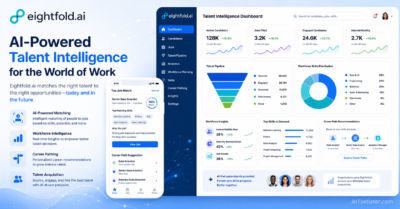
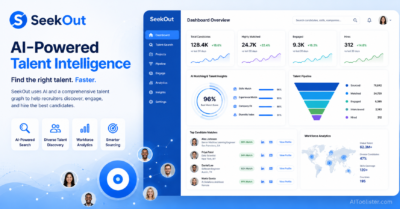
Talent intelligence refers to the use of data and analytics to understand talent markets, workforce trends, and candidate populations. AI recruiting tools that incorporate talent intelligence capabilities can help organisations understand where qualified candidates for specific roles are located, what skills are in demand or short supply, how competitors are hiring, and what salary ranges the market supports. This information supports more strategic workforce planning and sourcing decisions rather than reactive, role-by-role recruiting. Platforms like Eightfold AI and SeekOut are examples that incorporate broader talent intelligence alongside their core recruiting capabilities.
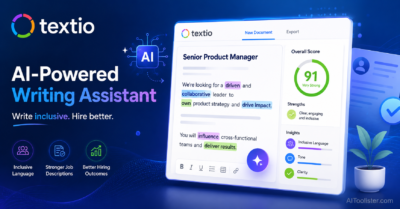
AI job description tools analyse the language used in postings and flag terms or phrasing that may be problematic — including gendered language, unnecessarily restrictive requirements, jargon that limits applicant diversity, or formatting that reduces readability. Some tools suggest alternatives and score a posting’s likely effectiveness in attracting qualified candidates from a diverse range of backgrounds. Textio is a well-known example in this space, focusing specifically on the language quality of job postings and other talent-facing communications. Better job descriptions attract more relevant applicants, which reduces screening volume and improves the quality of the candidate pipeline from the outset.
Many do, though the specific ATS platforms supported vary between tools and are updated regularly. For most recruiting teams, ATS integration is a practical requirement rather than a nice-to-have — a sourcing or screening tool that doesn’t connect to the system where candidate records are managed creates duplicate data entry and workflow friction. Before evaluating a tool beyond the demo stage, verify that it integrates with your specific ATS and understand what data flows between the systems. Integration depth varies too: some tools offer basic data sync while others provide tighter workflow connections that reduce manual steps between platforms.
Candidate data privacy is a significant compliance consideration in recruiting, where tools routinely handle personal information including contact details, employment history, and in some cases assessment results and interview recordings. Applicable regulations vary by region — GDPR in Europe, various state-level privacy laws in the United States, and equivalents elsewhere — and compliance requirements differ depending on where candidates are located. Reputable AI recruiting platforms document their compliance posture and offer data processing agreements. Before deploying any tool that handles candidate personal information, review the provider’s current privacy documentation and confirm it meets the legal requirements applicable to your recruiting markets.
Start by identifying which part of the recruitment workflow needs the most support — sourcing, screening, job description quality, candidate engagement, interview assessment, or a combination. Match the tool’s core strength to that need. Then verify integration compatibility with your existing ATS and HR systems. For enterprise teams, evaluate scalability and support for multiple hiring workflows and geographies simultaneously. Examine how the provider addresses bias risk and what transparency or auditing they offer around their AI decision-making. Data privacy compliance relative to your candidate markets is non-negotiable. Pricing models vary considerably, and ease of adoption matters if the tool needs to be used by hiring managers and HR generalists rather than only experienced recruiters.