Best AI Tools for Marketing in 2026 — What’s Actually Moving the Needle
Last updated: June 2026 | 10 tools reviewed | Pricing verified
Introduction
Let’s cut straight to the point.
Marketing budgets are being scrutinized more carefully than they have been in years. Every tool subscription, every agency retainer, every headcount request now requires a clearer answer to the same question: what is this actually producing?
At the same time, the workload on marketing teams has not decreased. If anything, the expectation that a team of three should produce the output of a team of ten — across more channels, with more personalization, and with faster turnaround — has become the standard rather than the exception.
AI tools are the answer that a lot of marketing teams have landed on. But the reality of AI in marketing is messier than the vendor promises suggest. Some tools deliver genuinely transformative results. Others add complexity, cost, and a learning curve for marginal gains. And a significant number of products marketed as “AI-powered” are doing far less with AI than their positioning implies.
This article is written for marketers who think in terms of outcomes — cost per acquisition, conversion rates, organic traffic, email open rates, campaign ROAS — rather than feature checklists. For each tool covered, the focus is on what it actually changes in a marketing operation, where it earns its cost, and where it falls short of the promises made about it.
Ten tools. Honest assessment. No affiliate-driven rankings.
The Marketing Problem AI Actually Solves
Before getting into individual tools, it is worth being specific about what AI is genuinely solving in marketing operations right now — because the honest answer is narrower than the marketing around AI tools suggests.
The Scale Problem Is Real
The volume of content that effective multi-channel marketing requires in 2026 is simply beyond what most teams can produce manually at acceptable quality. A content marketing program that drives meaningful organic traffic requires consistent publishing at volume. A paid social program that tests and iterates effectively requires creative variation at a pace no design team can sustain manually. An email program that personalizes meaningfully at scale requires segmentation logic and content variation that spreadsheets and manual copywriting cannot deliver.
AI tools address the scale problem by compressing production time, generating variations automatically, and maintaining quality consistency across high volumes of output. This is the area where the ROI case for AI marketing tools is clearest and most immediate.
The Personalization Gap
Customer expectations for personalization have outpaced most marketing teams’ ability to deliver it without AI. Generic email blasts underperform segmented, behaviorally triggered sequences by margins that compound over time. Website experiences that serve the same content to every visitor leave a conversion opportunity on the table that AI-powered personalization tools can capture.
The gap between what customers expect and what most teams can deliver manually is where AI creates the most measurable business impact — not in producing more content, but in making the content and experiences more relevant to the specific person receiving them.
Data That Nobody Is Reading
Most marketing teams have access to more data than they can practically analyze. Campaign dashboards, email metrics, website analytics, social performance data, CRM insights — the information exists, but turning it into specific, actionable decisions requires analytical time that most teams do not have consistently available. AI tools that surface the most important insights automatically — flagging anomalies, identifying trends, recommending optimizations — solve a real problem that data access alone does not.
The 10 Best AI Tools for Marketing in 2026
1. HubSpot AI — The Marketing and CRM Platform That Keeps Getting Better
There is a version of this article that puts HubSpot at number ten and leads with more specialized tools because HubSpot is the obvious choice. But obvious choices are obvious for a reason — and HubSpot’s AI features in 2026 have made it more deserving of the top position than it was even two years ago.
What HubSpot provides that no specialist tool on this list can match is a complete view of the customer. Marketing, sales, and service data living in the same platform means that the AI features are not working with a partial picture — they are drawing on the full customer lifecycle to make recommendations, personalize communications, and identify opportunities that tools operating in isolation cannot see.
The AI features woven through the platform in 2026 cover a genuine range of marketing functions. The content assistant generates email copy, blog posts, landing page content, and social media posts in the brand voice established through previous content. The AI-powered lead scoring identifies which contacts in the database are most likely to convert based on behavioral signals, allowing sales and marketing to focus follow-up where the probability of return is highest. The campaign assistant suggests audience segments, messaging variations, and optimal send times based on historical performance data specific to your contact list — not generic industry benchmarks.
For marketing teams currently running marketing automation, CRM, email, and content on separate platforms that do not share data cleanly, the argument for consolidating on HubSpot is not just about AI features — it is about having AI that works with complete information rather than fragments.
Key Features:
- AI content assistant for email, blog, social, and landing page content
- Predictive lead scoring based on behavioral signals
- Campaign performance AI with optimization recommendations
- AI-powered audience segmentation
- Chatbot builder with conversational AI
- Smart send time optimization for email
- Revenue attribution reporting
- SEO content strategy tools
- Social media management and scheduling
Who It Is Best For: Marketing teams that want a complete platform rather than a collection of specialist tools. Particularly strong for B2B companies where the relationship between marketing activity and revenue needs to be clearly tracked. Also, the right choice for teams currently running disconnected marketing tools who are spending too much time on data reconciliation.
Pricing:
- Free Plan: Yes — genuinely comprehensive free CRM and basic marketing tools
- Starting Price: $20/month (Starter plan)
- Best Value: Marketing Hub Professional at $800/month for teams needing full automation and AI features
Pros:
- AI works across the full customer lifecycle — not just one marketing function.
- The free plan provides real value before any financial commitment.
- Revenue attribution connects marketing activity to business outcomes.
- Consolidates multiple tools into one platform — reduces stack complexity.
Cons:
- Full AI features require Professional or Enterprise tiers — a significant cost jump from Starter.
- It can feel like overkill for very small teams or simple marketing operations.
- Implementation investment is significant for larger teams with existing data.
2. Jasper AI — When Content Volume Is the Constraint
Here is the situation Jasper is built for: your marketing strategy requires more content than your team can produce, the quality bar is high enough that generic AI output is not acceptable, and you have multiple brands or content channels that each need to sound distinctly different from each other.
Most marketers who try general-purpose AI writing tools for the first time use ChatGPT or a similar tool, get output that is competent but sounds generic, and conclude that AI writing is not ready for their use case. Jasper’s brand voice feature is the reason that the conclusion is often wrong. When trained on examples of how a specific brand communicates — the vocabulary it uses, the sentence rhythm it favors, the level of formality it maintains, the topics it typically addresses — Jasper produces content that is noticeably more consistent with established brand guidelines than untrained AI output.
For marketing agencies managing content for multiple clients, this is the difference between AI that creates editorial problems and AI that solves production ones. Each client’s brand voice is stored separately — a financial services firm’s content does not bleed into a consumer lifestyle brand’s content — and the system maintains that distinction across high volumes of output.
The Surfer SEO integration transforms Jasper from a content production tool into a content performance tool. Rather than producing content that reads well but may not rank, the integrated workflow produces content that is simultaneously well-written and optimized against the specific competitive landscape of the target keyword. For content marketers whose success is measured in organic traffic and rankings, this integration is the feature that justifies the cost.
Key Features:
- Brand voice training and multi-brand management
- Long-form content generation with a document editor
- Surfer SEO integration for search-optimized content
- Marketing template library — email, social, ads, blog, landing pages
- Campaign brief to content workflow
- Multi-language content generation
- Plagiarism detection
- Team collaboration and content approval workflows
- AI art generation for content visuals
Who It Is Best For: Marketing agencies, content marketing teams with high publishing volume requirements, and businesses managing content across multiple brands or channels simultaneously. The cost-to-value equation works best for teams producing consistent, high-volume written content where quality consistency is as important as production speed.
Pricing:
- Free Plan: 7-day trial
- Starting Price: $49/month (Creator — single user)
- Best Value: Pro plan at $69/month for multiple brand voices and seats
Pros:
- Brand voice consistency is meaningfully better than general-purpose AI tools.
- Surfer integration makes content production and SEO optimization a single workflow.
- Handles the content volume that would otherwise require additional writers
- Multi-brand management is practical for agency use.
Cons:
- Expensive relative to general-purpose alternatives for lower-volume use
- The trial period is too short for evaluating long-form content quality properly.
- Best results require upfront investment in brand voice training.
3. Semrush AI — Competitive Intelligence That Turns Into Strategy
The question Semrush answers better than any other tool on this list is: what is actually working in your market, and what should you do about it?
Every marketing decision made without a competitive context is made partially blind. Knowing which keywords your competitors rank for, which content types are driving their traffic, which advertising messages they are running, and which backlink sources are supporting their authority gives a marketing team a strategic picture that internal data alone cannot provide. Semrush has always been the most comprehensive source of this intelligence — its AI features in 2026 have made the gap between having that intelligence and acting on it significantly smaller.
The AI writing assistant in Semrush produces SEO-optimized content briefs and drafts that are built directly from competitive analysis data — not generic SEO principles, but the specific content structure, keyword coverage, and topic depth that is performing in the specific competitive landscape you are operating in. This is a meaningful distinction. Generic SEO advice tells you to “write comprehensive content.” Semrush’s AI tells you specifically which topics, which questions, and which related keywords the top-ranking content in your category covers — and then helps you produce content that covers them better.
The Copilot feature — Semrush’s AI assistant embedded across the platform — monitors your campaigns and rankings continuously and surfaces specific recommendations when it identifies an opportunity or a problem worth acting on. Rather than checking dashboards manually and trying to identify what changed, Copilot brings the important changes to your attention proactively.
Key Features:
- Keyword research with AI opportunity identification
- Competitor traffic and ranking analysis
- AI Copilot for proactive performance recommendations
- SEO content brief and draft generation
- Backlink analysis and link-building tools
- Paid advertising intelligence and competitor ad monitoring
- Social media analytics and tracking
- Local SEO tools
- Content audit and optimization recommendations
- Market exploration and audience intelligence
Who It Is Best For: SEO-focused marketing teams, content marketers whose success metrics are search traffic and rankings, and any marketing team that makes strategic decisions based on competitive landscape analysis. Also essential for paid search and paid social teams who want intelligence on competitor advertising strategies.
Pricing:
- Free Plan: Limited — 10 searches per day
- Starting Price: $139.95/month (Pro plan)
- Best Value: Guru plan at $249.95/month for content marketing tools and historical data
Pros:
- Most comprehensive competitive intelligence platform available
- AI Copilot proactively surfaces actionable recommendations.
- Covers SEO, paid, social, and content in one platform
- Data depth is unmatched — no competitor comes close on keyword and traffic intelligence.
Cons:
- Most expensive tool on this list — significant investment for smaller teams
- Learning curve is steep — full value requires time investment in the platform.
- Some features are more relevant to larger operations with dedicated SEO resources.
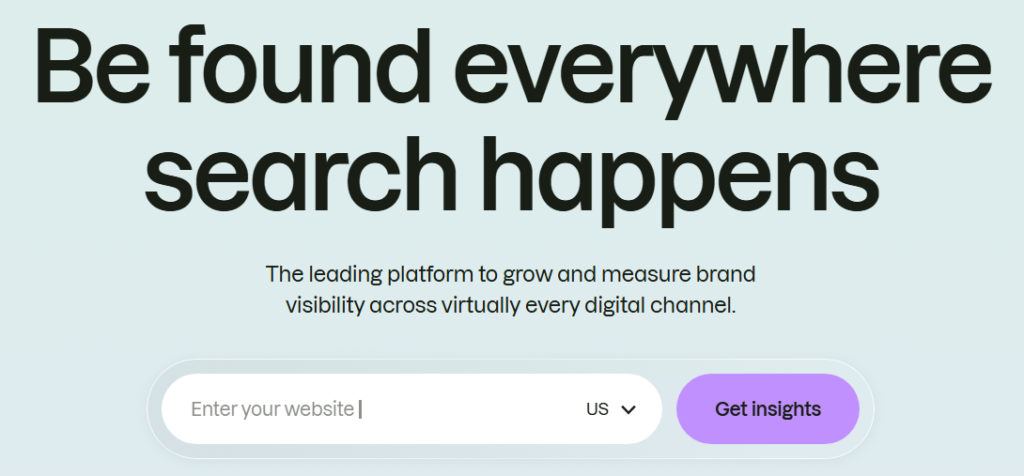
4. Klaviyo AI — Email and SMS Marketing That Learns From Behavior
Email marketing performance varies enormously between teams using the same tools — the difference is almost always in segmentation depth and message relevance rather than design quality or sending frequency. Klaviyo’s AI features are built around closing this gap: making the behavioral targeting and personalization that distinguishes high-performing email programs accessible to teams that do not have data scientists building custom segmentation models.
The predictive analytics features are where Klaviyo’s AI creates the most directly measurable impact. Predicted lifetime value identifies which customers are worth investing marketing spend in retaining. Predicted churn probability identifies which customers are showing behavioral signals of disengagement before they actually unsubscribe or stop purchasing. Predicted next order date enables timing communications to arrive when a customer is most likely to be in a purchase mindset based on their historical behavior pattern.
These are not novel concepts — enterprise companies with large data science teams have been doing this for years. Klaviyo makes them accessible without a data science team, and the impact on email revenue is measurable within the first campaign cycles where the predictions are applied.
The AI subject line and content generation tools are genuinely useful but secondary to the predictive features — the real value is in who receives which message and when, not just what the message says.
Key Features:
- Predictive lifetime value modeling
- Churn prediction and win-back automation
- Predicted next order date for send timing optimization
- AI subject line and content generation
- Behavioral flow automation — abandoned cart, browse abandonment, post-purchase
- Advanced segmentation based on predicted behavior
- A/B testing with AI-powered winner selection
- SMS marketing with unified customer profiles
- Revenue attribution reporting
Who It Is Best For: E-commerce businesses with substantial customer purchase history data — Klaviyo’s predictive features produce the best results when there is meaningful behavioral data to learn from. Also strong for any business where email and SMS are primary revenue drivers rather than supplementary channels.
Pricing:
- Free Plan: Yes — up to 500 contacts and 150 SMS credits
- Starting Price: Email from $45/month based on contact count
- Best Value: Combined email and SMS plan — pricing scales with list size
Pros:
- Predictive features produce measurable revenue impact on e-commerce programs.
- Behavioral automation depth is among the best available for mid-market companies.
- Revenue attribution makes the ROI case clear and quantifiable.
- SMS and email unified under one customer profile — avoids the fragmentation of separate tools
Cons:
- Pricing scales significantly with list size — can become expensive for large databases.
- Predictive features require substantial historical data to produce reliable predictions.
- Primary value is in e-commerce — less specialized for B2B or service business email programs.

5. Sprout Social AI — Social Media Management That Goes Beyond Scheduling
Most social media management tools are fundamentally scheduling tools with analytics added. Sprout Social has consistently been the exception in this category — a platform that treats social media as a business intelligence channel rather than just a content distribution channel — and its AI features have extended this positioning significantly.
The AI-powered listening tools monitor conversations across social platforms and the broader web, identifying mentions of your brand, your competitors, your industry, and any topics you define as relevant. The AI analyzes sentiment across these conversations, identifies emerging trends before they reach peak volume, and surfaces the specific insights most relevant to marketing strategy — which competitor messaging is generating the most engagement, which customer pain points are appearing repeatedly in organic conversations, and which product features customers are most vocal about.
This category of intelligence — understanding what the market is actually saying rather than what survey respondents report — feeds marketing strategy decisions in ways that are difficult to replicate from other data sources. For brands where social listening is a genuine strategic function rather than just reputation monitoring, Sprout’s AI makes the intelligence operationally useful rather than just interesting.
The AI writing assistant and optimal send time recommendations cover the content production and scheduling functions that most teams expect from this category of tool — they are well-implemented but not the primary differentiator.
Key Features:
- AI-powered social listening across platforms and the web
- Sentiment analysis and trend identification
- Competitive social intelligence
- AI writing assistant for social content
- Optimal send time recommendations per platform
- Unified inbox for social engagement management
- Detailed analytics and custom reporting
- Influencer discovery and management tools
- Employee advocacy program management
- Crisis detection and alert system
Who It Is Best For: Mid-size to enterprise marketing teams where social media serves a strategic intelligence function alongside distribution. Particularly valuable for brand-sensitive industries, companies in competitive markets where competitor social strategy intelligence matters, and teams managing social at a scale that requires workflow management beyond individual scheduling.
Pricing:
- Free Plan: 30-day trial
- Starting Price: $249/month (Standard plan)
- Best Value: Advanced plan at $399/month for full AI features and listening tools
Pros:
- Social listening intelligence is genuinely strategic — not just reputation monitoring.
- Competitive intelligence across social channels informs marketing strategy.
- Unified inbox management scales for high-engagement social programs
- Crisis detection provides an early warning that manual monitoring misses
Cons:
- Expensive for smaller teams where simpler scheduling tools are sufficient
- Full listening and AI features require higher-tier plans.
- Value is proportional to social program scale — less compelling for low-volume social operations.
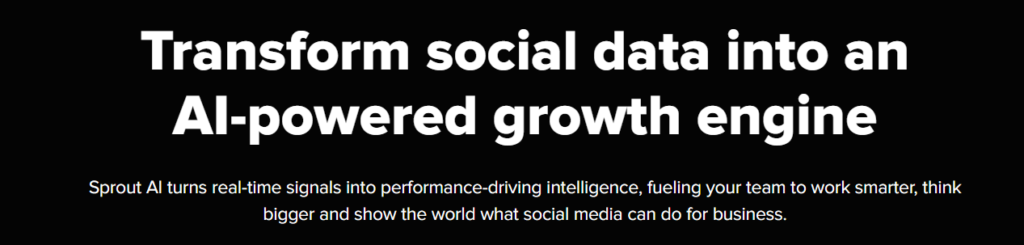
6. Mutiny — Personalization That Changes What Website Visitors See
Most marketing teams spend significant budget driving traffic to websites that show every visitor the same experience. A startup founder and a VP of Marketing at a Fortune 500 company arrive at the same B2B SaaS homepage and see identical headline copy, identical social proof, identical CTAs — despite having entirely different concerns, different buying authority, and different reasons for evaluating the product.
Mutiny is built to fix this. The platform uses AI to identify visitor characteristics — company size, industry, traffic source, location, and firmographic data for B2B visitors — and serves dynamically personalized page content to each segment without requiring engineering resources or a separate page for each audience.
The AI component handles the heavy lifting of segment identification and content recommendation. Rather than a marketer manually defining every audience segment and writing every variation, Mutiny’s AI analyzes conversion data, identifies which visitor characteristics correlate with conversion probability, and recommends the personalization opportunities most likely to impact business results. The marketer then writes the content variations — a different headline for enterprise visitors, a different hero message for visitors from a specific industry — and Mutiny handles the targeting and serving logic automatically.
For B2B marketing teams running account-based marketing programs, the ability to show named account visitors content that references their specific company or industry is particularly powerful and has driven reported conversion rate improvements that justify the tool’s cost on individual campaigns.
Key Features:
- AI audience segmentation from firmographic and behavioral data
- Dynamic content personalization without engineering resources
- Account-based marketing personalization for named accounts
- AI-powered conversion opportunity recommendations
- A/B testing for personalized variations
- Integration with CRM and marketing automation platforms
- Revenue impact attribution for personalization programs
- Personalization playbooks for common B2B use cases.
Who It Is Best For: B2B marketing teams with meaningful website traffic running account-based marketing programs or wanting to improve conversion rates from existing traffic. The tool requires sufficient traffic volume to generate statistically meaningful personalization data — less valuable for very low-traffic sites.
Pricing:
- Free Plan: No
- Starting Price: Custom pricing — typically mid-market entry around $1,500/month
- Best Value: Contact for pricing based on traffic volume and use case
Pros:
- Directly impacts conversion rates from existing traffic — no additional acquisition spend required.
- Account-based personalization is genuinely differentiated for B2B programs.
- AI recommendations reduce the time required to identify personalization opportunities.
- No engineering dependency — marketing teams control personalization independently.
Cons:
- Expensive — significant investment for most marketing budgets
- Requires sufficient traffic and conversion data to generate meaningful insights
- Value is concentrated in B2B — less compelling for e-commerce or consumer marketing.
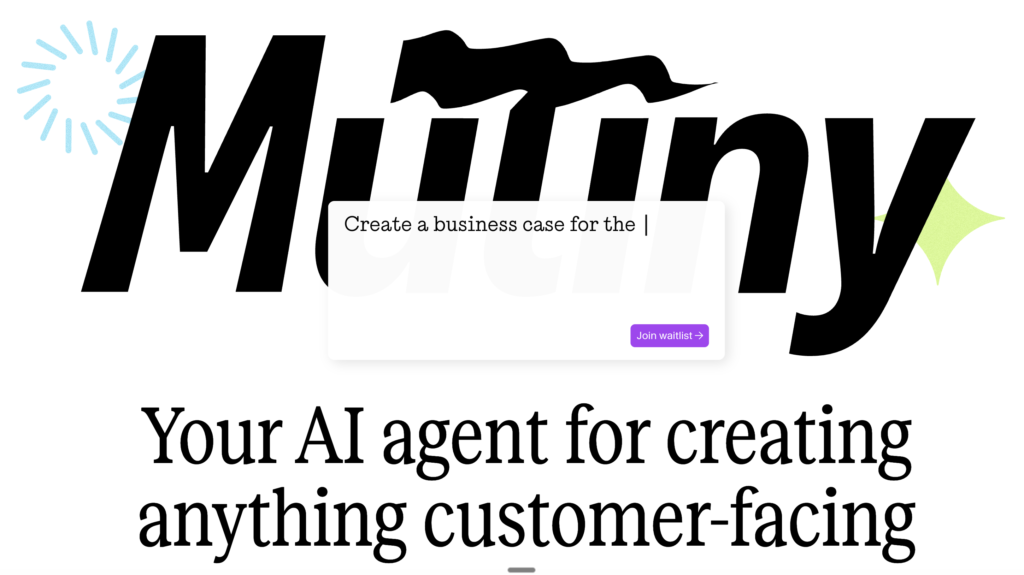
7. Smartly.io — Paid Social Advertising at a Scale Manual Management Cannot Match
Paid social advertising has become genuinely complex to manage well. Creative fatigue cycles faster than teams can produce new assets manually. Audience targeting requires continuous adjustment as platform algorithms change. Budget allocation across campaigns, ad sets, and platforms needs to respond to performance data in near real time to optimize spend efficiency.
Smartly.io is an AI-powered paid social management platform built for teams running advertising programs at a scale where manual management becomes the bottleneck. Its creative automation tools generate and test ad creative variations at a volume that would be impossible to produce and manage manually — systematically testing headline, image, copy, and format combinations to identify which elements drive performance and automatically increasing investment in what works.
The AI budget optimization continuously reallocates spend across campaigns based on real-time performance signals — moving budget away from underperforming ad sets before manual review would catch the issue, and increasing spend on high-performing combinations while they are converting efficiently. For advertisers who have experienced the frustration of checking a campaign to find days of wasted spend on a poorly performing ad set, the automated optimization represents a clear and quantifiable improvement.
The platform covers Facebook, Instagram, TikTok, Pinterest, Snapchat, and Google simultaneously — managing multi-platform paid social programs from a single interface with AI that understands performance patterns across platforms rather than treating each in isolation.
Key Features:
- AI creative automation and variation testing
- Automated budget optimization across campaigns and platforms
- Dynamic creative assembly from component libraries
- Cross-platform campaign management — Meta, TikTok, Pinterest, Snapchat, Google
- Performance anomaly detection and alerting
- Creative performance analytics and fatigue identification
- Audience management and lookalike optimization
- Creative template library and brand asset management
- Advanced reporting and attribution
Who It Is Best For: Performance marketing teams and agencies managing significant paid social budgets across multiple platforms where the volume and complexity of manual campaign management create inefficiency. The ROI case is strongest when the team is currently losing spend to slow optimization cycles or creative fatigue.
Pricing:
- Free Plan: No
- Starting Price: Custom pricing based on managed spend volume
- Best Value: Contact for pricing — typically a percentage of managed ad spend
Pros:
- Creative automation produces testing volume impossible to achieve manually.
- Budget optimization responds to performance signals faster than manual management.
- Multi-platform management from a single interface reduces operational complexity.
- Creative fatigue detection prevents the performance deterioration that most teams catch too late.
Cons:
- Enterprise pricing — not accessible for small advertising budgets
- Requires investment in creative asset libraries to fully leverage automation
- Learning curve for teams accustomed to native platform management tools
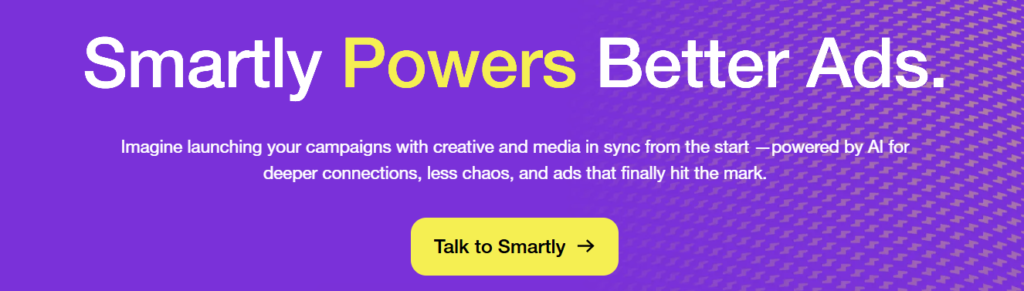
8. Persado — When the Words in Your Marketing Actually Matter
Most AI writing tools focus on producing content faster. Persado focuses on producing content that converts better, specifically by analyzing which language elements in marketing communications generate the strongest emotional responses and behavioral outcomes in specific audience segments.
The platform’s AI has been trained on marketing performance data across billions of communications — understanding which emotional appeals, which specific words, which narrative structures, and which calls to action perform best for specific message types, channels, and audiences. Rather than generating content that sounds plausible, Persado generates content optimized for the specific emotional and behavioral response the communication is designed to produce.
The practical difference this creates is most clearly visible in email subject lines, push notifications, and paid ad headlines — the short-form persuasive content where the specific word choice has a direct and measurable impact on click-through and conversion rates. Marketing teams using Persado consistently report meaningful lifts in performance metrics compared to their previous copy — not because the content is more creative, but because it is more precisely matched to what their specific audience responds to.
For large enterprises running high-volume customer communication programs — financial services, retail, insurance, telecom — where even a two percent improvement in email open rate or conversion rate represents significant revenue at scale, Persado’s approach to language optimization produces returns that general-purpose writing tools cannot match.
Key Features:
- AI language optimization based on emotional response data
- Performance prediction for marketing copy before sending
- Channel-specific optimization — email, paid ads, push, SMS, web
- Audience segment language preference analysis
- A/B testing framework with AI winner identification
- Brand language guidelines compliance
- Integration with major marketing automation and ad platforms
- Campaign performance analytics and language insight reporting
Who It Is Best For: Enterprise marketing teams running high-volume customer communication programs where incremental improvements in conversion rates generate significant revenue impact. Particularly strong for financial services, retail, and subscription businesses with large customer databases.
Pricing:
- Free Plan: No
- Starting Price: Enterprise pricing — contact for a quote
- Best Value: Enterprise contracts based on volume and channel coverage
Pros:
- Language optimization is grounded in performance data — not creative intuition.
- Measurable conversion improvements that justify enterprise investment
- Channel-specific optimization reflects how different message formats work differently.
- Performance prediction reduces the risk of sending underperforming copy at scale.
Cons:
- Enterprise pricing makes it inaccessible for most small and mid-size marketing teams.
- Value is concentrated in high-volume communication programs — less compelling for low-frequency marketing.
- Implementation and integration require technical resources.

9. Surfer SEO — Organic Growth Without the Guesswork
The gap between writing content and writing content that ranks in Google is not primarily a writing quality gap — it is an optimization gap. Content that covers a topic well but does not match the specific structure, keyword coverage, and depth that Google’s algorithm associates with authoritative content on that topic will consistently underperform content that does, regardless of how well it is written.
Surfer SEO closes this gap by analyzing the top-ranking content for any target keyword and telling you specifically what your content needs to include to be competitive — not generic SEO advice, but data derived from what is actually working in the specific competitive landscape you are entering.
The Content Editor shows a real-time optimization score as you write, tracking keyword usage, heading structure, content length, and semantic coverage against the benchmark set by competing high-ranking content. The AI outline generator produces a content structure based on this competitive analysis before writing begins. The brief generator goes further — producing a complete content production document that tells a writer not just what to include but how to structure the competitive differentiation that moves new content above established competition.
For content marketing teams whose primary success metric is organic traffic growth, Surfer is not optional infrastructure — it is the difference between a content program that compounds in value over time and one that produces content that nobody finds through search.
Key Features:
- SERP analysis and competitive content benchmarking
- Real-time Content Editor with optimization scoring
- AI content brief and outline generation
- NLP keyword recommendations and semantic coverage
- Content audit for existing published pages
- Internal linking recommendations
- Keyword research with clustering and intent analysis
- Jasper integration for a combined AI writing workflow
- Google Search Console integration for performance tracking
Who It Is Best For: Content marketing teams and SEO professionals whose primary channel for audience acquisition is organic search. Also essential for marketing agencies managing SEO programs for multiple clients, where a consistent content optimization methodology is required.
Pricing:
- Free Plan: No — 7-day money-back guarantee
- Starting Price: $89/month (Essential plan)
- Best Value: Scale plan at $129/month for higher article limits and AI features
Pros:
- Data-driven content optimization removes the guesswork from SEO content strategy.
- Real-time scoring makes optimization part of writing rather than a separate pass.
- Brief generation standardizes content quality across teams and writers.
- Competitive analysis reflects actual search performance — not theoretical best practices.
Cons:
- Expensive for the primary function of content optimization
- Requires consistent use across all content to realize the compounding value
- Less useful for marketing functions outside of organic content and SEO
10. ChatGPT — The Marketing Tool That Refuses to Be Categorized
ChatGPT closes this list not because it is the least important — it is arguably the most used AI tool in marketing today — but because its value is so distributed across marketing functions that it does not fit neatly alongside specialist tools.
The honest case for ChatGPT in a marketing context is not that it does any single marketing function better than the specialist tools built for that function. Jasper produces better brand-consistent long-form content. Klaviyo’s predictive features are more sophisticated for email. Semrush provides better competitive intelligence. What ChatGPT provides is something different — a flexible, immediately responsive AI that handles the enormous variety of smaller, harder-to-categorize marketing tasks that do not justify a specialist tool but collectively consume significant time.
Writing the creative brief for a campaign. Drafting the copy variations for an A/B test. Researching a competitor’s messaging positioning. Writing the internal presentation explaining why the Q2 campaign underperformed. Generating thirty headline options for a landing page test. Summarizing a forty-page market research report into five key takeaways. Drafting the follow-up email sequence for a recent webinar. Writing the social media responses to customer comments that need a personal touch.
None of these tasks requires a specialist tool. All of them take real time when done without AI assistance. ChatGPT handles all of them competently — and the free plan handles most of them without any cost.
Key Features:
- Marketing copy drafting across every format
- Campaign ideation and creative brief development
- Competitor messaging research and analysis
- A/B test variation generation
- Market research summarization
- Internal presentation and report writing
- Email sequence drafting
- Social media content creation
- Customer communication personalization at scale
- Strategic analysis and recommendation frameworks
Who It Is Best For: Every marketer, regardless of specialization or team size. Particularly valuable for solo marketers and small teams who cannot justify specialist tool subscriptions for every marketing function but need AI assistance across the full range of tasks.
Pricing:
- Free Plan: Yes — handles most daily marketing tasks effectively
- Starting Price: $20/month (Plus plan)
- Best Value: The free plan is sufficient for most individual marketers’ use cases
Pros:
- Handles the broadest range of marketing tasks of any tool on this list
- Free plan is genuinely useful — not a crippled teaser.
- No setup, onboarding, or integration required
- Iterative conversation produces better outputs than one-shot generation tools.
Cons:
- No marketing-specific features, integrations, or platform data
- Output quality is heavily dependent on prompt quality.
- Cannot replace specialist tools for functions where data integration and platform intelligence matter

Pricing Comparison Table
| Tool | Free Plan | Starting Price | Best Value Plan | Best For | Difficulty |
| HubSpot AI | Yes | $20/month | Marketing Hub Pro $800/month | All-in-one marketing and CRM | Medium |
| Jasper AI | 7-day trial | $49/month | Pro $69/month | Content marketing at scale | Easy |
| Semrush AI | Limited | $139.95/month | Guru $249.95/month | SEO and competitive intelligence | Medium |
| Klaviyo AI | Yes | $45/month | Scales with list size | Email and SMS marketing | Medium |
| Sprout Social AI | 30-day trial | $249/month | Advanced $399/month | Social media management | Medium |
| Mutiny | No | Custom ~$1,500/month | Contact for pricing | Website personalization | Medium |
| Smartly.io | No | Custom (% of spend) | Contact for pricing | Paid social advertising | Hard |
| Persado | No | Enterprise pricing | Contact for quote | Language optimization | Hard |
| Surfer SEO | No | $89/month | Scale $129/month | SEO content optimization | Medium |
| ChatGPT | Yes | $20/month | Free plan | Flexible marketing tasks | Easy |
The Right AI Marketing Stack for Your Situation
The ten tools above serve different marketing functions and different team sizes. Buying all of them is not the answer — the answer is identifying which two or three address the highest-priority gaps in your current operation.
If organic search is your primary acquisition channel, the non-negotiable combination is Semrush for competitive intelligence and keyword strategy, Surfer SEO for content optimization, and Jasper for production volume. This three-tool stack covers the full organic content lifecycle — from identifying what to produce, to writing it competitively, to producing it at the volume that search growth requires.
If email and retention marketing drive your revenue, Klaviyo’s predictive features are the highest-leverage investment available. HubSpot is the alternative for teams that need CRM integration alongside email, and for teams not on Shopify or an e-commerce platform where Klaviyo’s native integrations are strongest.
If paid social is a primary channel, Smartly.io at scale — for teams with significant budgets where manual management is the bottleneck — or ChatGPT plus native platform tools for teams with smaller budgets where the primary constraint is creative production rather than management complexity.
If you are a solo marketer or a team of two, the pragmatic stack is ChatGPT as the daily AI assistant, HubSpot’s free CRM and marketing tools for campaign management, and Semrush’s entry plan for competitive and keyword intelligence. That combination costs under $200 per month and covers the majority of what AI can do for a marketing function at a realistic solo or small team scale.
What AI Marketing Tools Cannot Fix?
This section is short because the point is simple but important.
AI tools improve the efficiency and effectiveness of marketing execution. They do not fix weak positioning, an unclear value proposition, a product that does not match what the market needs, or messaging that does not resonate because it is targeting the wrong audience with the wrong story.
A marketer using Jasper to produce more content based on a strategy that is not working will produce more content that does not work — faster. A team using Klaviyo’s predictive segmentation on an email list full of unqualified contacts will get more efficient delivery of messages to people who are not going to buy. AI amplifies what is already there — good strategy and bad strategy alike.
The marketers who get the most from AI tools are those who are clear on their strategy, clear on their audience, and clear on what success looks like before they start using the tools to execute. AI handles the execution. The thinking still needs to be human.
Frequently Asked Questions
What is the best AI tool for marketing in 2026?
The honest answer depends entirely on which marketing function you are trying to improve. HubSpot AI is the strongest all-around platform for teams that want a complete solution covering CRM, email, content, and analytics. Semrush is the most comprehensive for teams whose primary channel is organic search. Klaviyo is the clearest recommendation for e-commerce businesses where email and SMS drive the majority of revenue. For any marketer who wants immediate AI assistance across the full range of marketing tasks without a specialist tool investment, ChatGPT’s free plan delivers genuine value from day one.
How is AI being used in digital marketing right now?
The most widely adopted applications in 2026 are content generation and editing, SEO keyword research and optimization, email personalization and send time optimization, paid advertising creative testing and budget allocation, social media scheduling and listening, and customer segmentation based on behavioral prediction. Less widely adopted but high-impact applications include website personalization based on visitor characteristics, AI-powered language optimization for conversion rate improvement, and competitive intelligence monitoring.
Will AI replace marketing jobs?
AI is replacing specific marketing tasks — manual content production, basic data analysis, repetitive campaign management decisions — but is not replacing marketing as a function. The roles most at risk are those defined primarily by the execution of repeatable tasks that AI handles well. The roles with the most durable value are those defined by strategic judgment, creative direction, customer insight, and the ability to integrate AI outputs into coherent marketing programs that reflect a genuine understanding of the audience. Marketing teams will likely become smaller in headcount while managing larger programs, which is already visible in hiring patterns at companies that have adopted AI tools aggressively.
What is the best free AI tool for marketing?
HubSpot’s free plan is the most comprehensively useful free marketing tool available — covering CRM, email marketing, live chat, and basic automation at no cost. ChatGPT’s free plan handles the broadest range of individual marketing tasks. Semrush’s free tier provides ten daily searches — enough for occasional competitive research but not a substitute for a paid plan on an active SEO program. Canva’s free plan covers most visual content needs for teams producing regular marketing materials.
How do I measure the ROI of AI marketing tools?
The measurement approach should be specific to the function the tool addresses. For content tools, measure change in organic traffic, publishing velocity, and content production cost per piece. For email tools, measure revenue per email, conversion rate changes, and list engagement metrics. For paid advertising tools, measure CPA, ROAS, and the time saved in campaign management, which translates to reduced agency or staff costs. For SEO tools, measure keyword ranking improvements and organic traffic growth over time. The tools that cannot demonstrate a measurable impact on metrics your business already tracks should be cut, regardless of how impressive the features sound.
Is AI marketing content penalized by Google?
Google’s quality guidelines focus on content helpfulness and expertise rather than production method. AI-assisted content that is accurate, genuinely useful, and reflects real expertise performs well in search. Thin, generic, or inaccurate content — regardless of whether a human or AI produced it — performs poorly. The practical guidance is to use AI for production efficiency while ensuring that the expertise, accuracy, and genuine value in the content come from human knowledge and judgment. Disclosure of AI use is not currently required by Google for standard marketing content.
Conclusion
The marketing teams that will look back at 2026 as the year their operation fundamentally changed are not the ones that adopted the most AI tools. They are the ones that identified the specific constraints limiting their results — not enough content, not enough conversion from existing traffic, not enough personalization, not enough competitive intelligence — and found the tools that addressed those constraints directly.
The tools on this list are not equally relevant to every marketing operation. Persado and Mutiny are enterprise investments that require enterprise traffic and communication volumes to justify. Smartly.io requires significant paid social budgets where automation produces measurable returns. Sprout Social requires social programs at a scale where the intelligence it provides changes decisions.
What is relevant to almost every marketing team, regardless of size, is the combination of a flexible AI assistant — ChatGPT — with one or two specialist tools that address the highest-priority constraints in the specific channels that drive the most business value for your organization.
Start there. Measure the impact. Build from the evidence of what is working rather than from a comprehensive AI marketing stack that looks impressive on a strategy deck and delivers marginal returns across too many tools simultaneously.
The best marketing in 2026 is still built on understanding your customer, knowing what you are trying to say, and having a clear picture of what success looks like. AI tools make the execution of that strategy faster and more effective. The strategy itself still needs you.
For more in-depth AI tool reviews and marketing technology comparisons, explore the full library at aitoolister.com.