Ahsan Javaid

Last updated: September 2026
Professional travel agents now have AI tools available at nearly every stage of their workflow — capturing what a client wants on the consultation call, drafting a first-pass itinerary, producing a branded proposal, staying in touch with past clients, and answering website enquiries before they go cold.
This guide covers the best AI tools for travel agents specifically, not the consumer trip-planning apps travelers use on their own. It’s organized around where each tool actually fits in an agent’s or agency’s workflow, from the first client conversation through to the follow-up campaign months later, so you can see which stage of your process a given tool actually speeds up.
Quick Comparison
| Tool | Best For | Main Travel-Agent Use | Free Option | Starting Price / Pricing Model |
|---|---|---|---|---|
| mTrip | Agency itinerary production and branded client delivery | Turning bookings into branded itineraries, apps, and PDFs | Free trial after a demo | Quote-based, priced by trip volume and modules |
| Mindtrip | Collaborative AI trip planning | Interactive itineraries clients can view and edit with you | Yes — free to use | No public subscription price; “for Business” tier is demo-based |
| Layla AI | A fast initial AI itinerary draft | Generating a first-pass day-by-day structure | Yes — free to use | Free; monetized through travel bookings, not a subscription |
| ChatGPT | Research, proposals, and general writing | Drafting emails, destination content, and visa/entry research | Yes — free tier | $20/month (Plus) |
| Otter.ai | Capturing client consultation calls | Transcribing and summarizing calls to record preferences | Yes — 300 min/month | $16.99/month (Pro, billed monthly); $8.33/month billed annually |
| Canva AI | Proposals, itinerary documents, marketing assets | Branded itinerary PDFs and social/marketing visuals | Yes — permanent free plan | $144/year for one person, billed annually (Pro); monthly billing costs more |
| HubSpot AI | CRM, lead and client follow-up | Past-client email campaigns and pipeline tracking | Yes — free CRM | $15/month per seat billed annually; $20/month per seat monthly |
| Tidio AI | Website enquiries and lead qualification | AI chat answering and qualifying site visitors | Yes — 50 conversations/month | $29/month (Starter); Lyro AI chat add-on from ~$32.50/month |
| Tripadvisor AI | Destination research and review-backed validation | Checking recommendations against real traveler reviews | Yes — completely free | Free |
| narvika | Travel-agency-specific AI assistants and automation | Booking-data checking and internal workflow automation | Yes — free self-installation tier | Free entry tier; Enterprise and training priced on request |
Pricing and features change; confirm current terms directly with each vendor before budgeting.
AI Trip Planning & Itinerary Delivery
mTrip
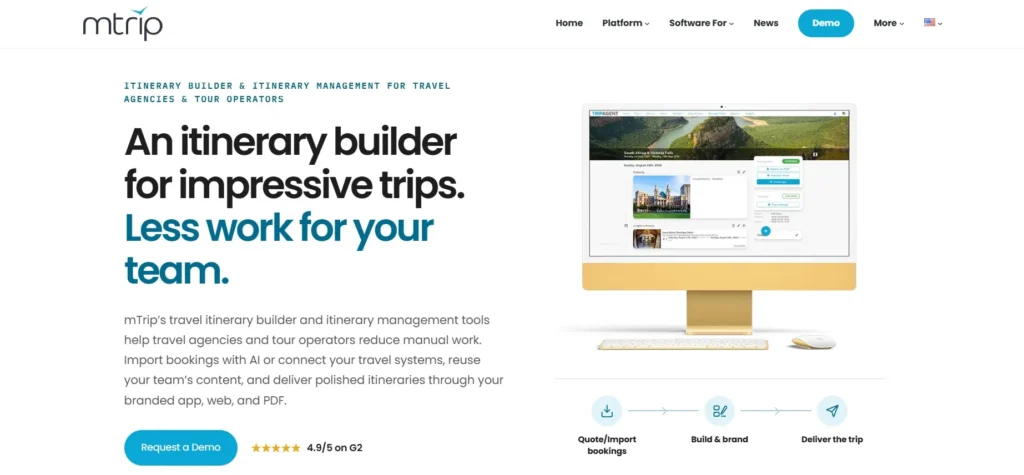
mTrip is agency infrastructure rather than a planning app you’d use for a single trip. It brings itinerary building, a branded client-facing mobile app, and automated document delivery into one platform, built specifically for agencies, tour operators, and travel management companies rather than solo advisors working alone.
The genuine AI feature is the AI Import Wizard, launched in 2026, which reads booking confirmations from emails, PDFs, Word documents, and spreadsheets and turns them into a structured, editable itinerary automatically — instead of an agent manually copying flight numbers and hotel addresses out of a supplier confirmation. Once built, the itinerary publishes to a branded mobile app, a web portal, and a PDF simultaneously, all under the agency’s own name.
Best for: agencies and tour operators that want a branded client app and automated document delivery, not solo advisors. Starting price: quote-based, priced by trip volume and the modules an agency activates — there’s no public per-seat rate. Free option: a free trial, but only after a scoping demo; it isn’t self-serve. Limitation: mTrip is explicitly not a CRM — it doesn’t handle lead management or sales pipeline, so agencies that need that pair it with a dedicated CRM tool.
Mindtrip
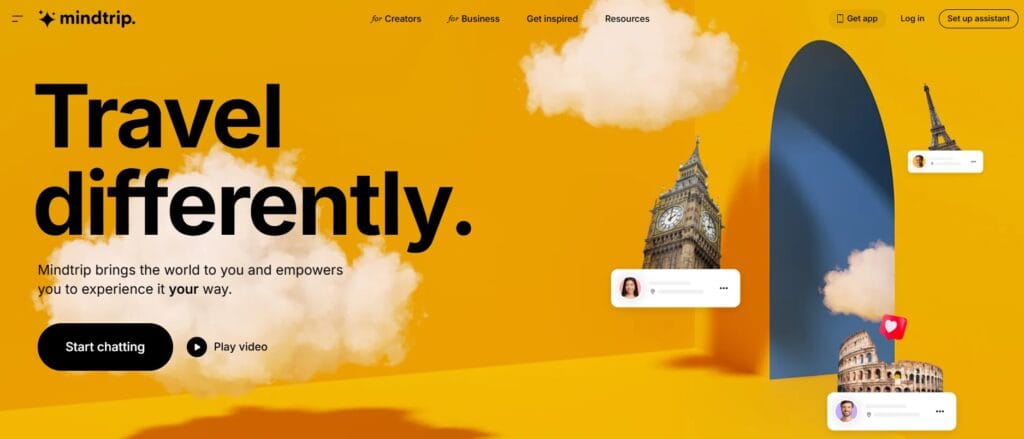
Mindtrip treats trip planning as an ongoing conversation rather than a single output. Ask it for a destination or a full itinerary, and it builds a visual, interactive plan built for sharing — something an agent can send a client to review and discuss, rather than a static document attached to an email.
This matters most for agents whose clients want to feel involved in shaping the trip. An interactive, shareable itinerary that both agent and client can look at together cuts down the back-and-forth that usually eats agent time on collaborative bookings. Mindtrip is free to use for planning; it also offers a “for Business” tier aimed at destinations and hotels rather than individual agencies, priced on a contact/demo basis rather than a public rate.
Best for: collaborative itinerary building where clients want visibility and input throughout the process. Starting price: no public subscription price is currently listed for individual use. Free option: yes — trip planning and collaboration are free to use. Limitation: Mindtrip is consumer-facing at its core; agents use it as a planning and collaboration tool, not as agency infrastructure like mTrip.
Layla AI
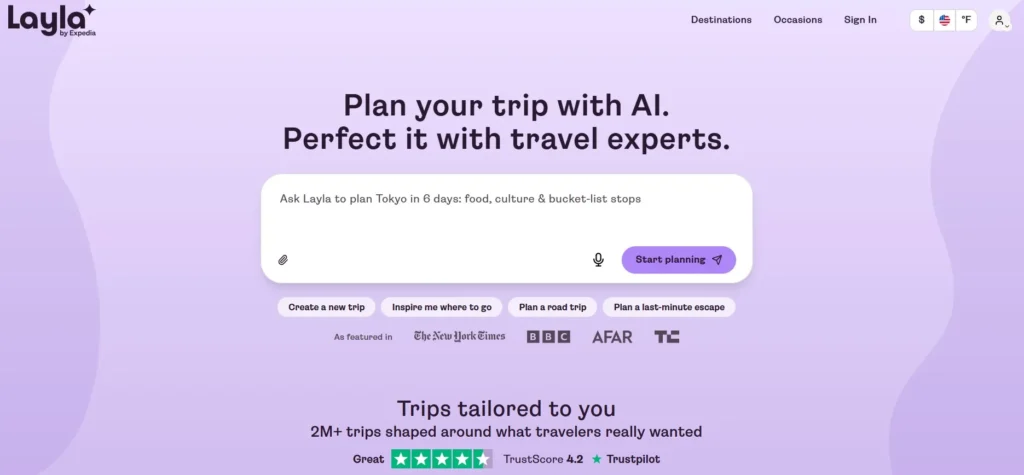
Layla generates a structured day-by-day itinerary from a description of the destination, trip length, traveler preferences, and budget. For an agent, it’s most useful as a fast starting draft — something to react to and customize with actual expertise, not a finished product to hand a client unedited.
The bigger change worth knowing: Layla AI was acquired by Expedia in mid-2026, and its own site now states the tool is free to use with no subscription fee — it makes money through the travel bookings made on the platform rather than a monthly charge. That’s a shift from Layla’s earlier premium-subscription model, and some third-party trackers still reference a legacy paid tier; treat the current official pricing as free unless Layla’s site says otherwise when you check.
Best for: generating a fast first-draft itinerary structure to build on. Starting price: free, monetized through bookings rather than a subscription. Free option: yes. Limitation: because Layla is built as a consumer trip-planning and booking tool, using it inside an agency workflow means treating its output strictly as a rough draft — verify supplier details, timing, and pricing before it goes anywhere near a client proposal.
Research, Writing & Client Requirements
ChatGPT
Neither an itinerary generator nor a CRM handles every writing task an agent faces day to day. ChatGPT fills that gap — drafting the proposal email that accompanies an itinerary, writing destination content for a client newsletter, researching visa and entry requirements for a specific nationality and destination combination, and producing the narrative descriptions that make a proposal read as considered rather than templated.
Best for: the surrounding written communication and research that itinerary tools don’t handle. Starting price: $20/month for the Plus plan. Free option: yes — the free tier covers most of this writing and research work adequately. Limitation: it has no independent access to live pricing, availability, or current entry requirements — treat visa and border-policy answers as a starting point to verify against an official source, not a final answer to give a client.
Tripadvisor AI
Tripadvisor’s AI trip builder generates itinerary suggestions grounded in its database of more than a billion real traveler reviews, which gives it an advantage generic AI itinerary tools lack: recommendations anchored to recent traveler experience rather than general training data that might be stale.
For an agent wanting a second opinion on whether a generated itinerary’s recommendations are still current and well-regarded, cross-referencing against Tripadvisor’s suggestions adds a layer of confidence before it goes in front of a client.
Best for: validating itinerary recommendations against current, real traveler review data. Starting price: free. Free option: yes — no account required to use it, and no paid tier exists for the assistant itself. Limitation: it’s a research and validation aid, not a full itinerary-management tool — there’s no client collaboration or agency branding layer.
Otter.ai
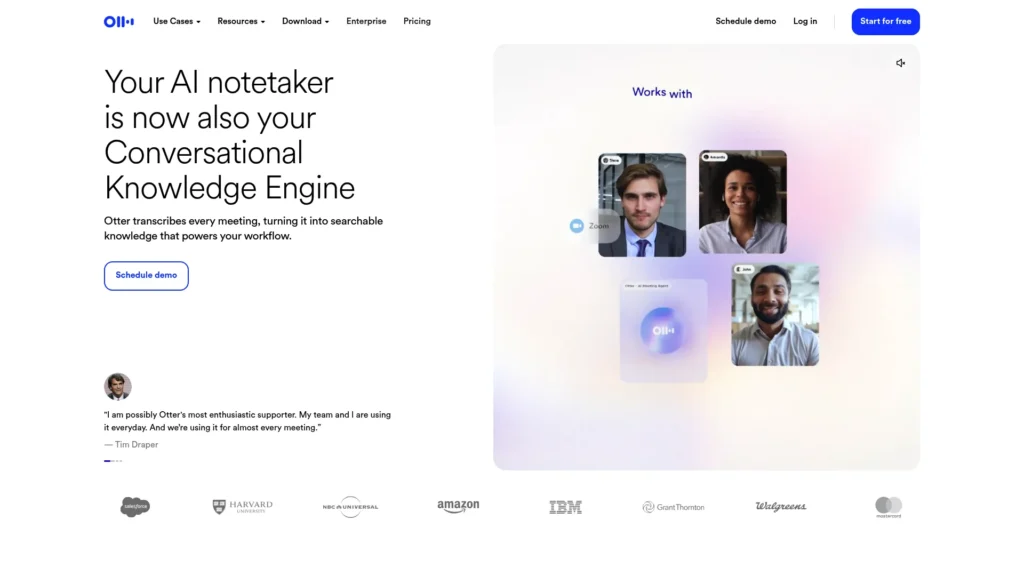
Client consultation calls carry a lot of specific preference information — dietary restrictions, mobility concerns, a honeymoon couple’s one must-do activity, a family’s firm budget ceiling. Misremembering any of it damages trust quickly. Otter.ai transcribes and summarizes these calls automatically, giving an agent an accurate record to build the itinerary from instead of relying on memory or rushed notes.
Best for: accurate capture of client preferences and requirements from consultation calls. Starting price: $16.99/month billed monthly for the Pro plan (about $8.33/month billed annually, roughly $100/year). Free option: yes — the Basic plan includes 300 transcription minutes a month, capped at 30 minutes per conversation. Limitation: the free tier’s per-conversation cap and lifetime import limit mean agents doing longer consultations will hit the ceiling quickly and need Pro.
Marketing, Proposals & Lead Management
Canva AI
A polished, branded itinerary document — agency logo, consistent formatting, professional layout — signals a level of professionalism a plain text email doesn’t. Canva AI (branded Magic Studio inside the editor) lets an agent produce these documents quickly, along with the social and marketing content that runs alongside them, using the same brand kit and templates.
Best for: professional itinerary presentation and marketing visuals. Starting price: $144/year for one person on the Pro plan, billed annually; Business runs $250/year per person. Monthly billing costs more than the annual rate shown. Free option: yes — Canva’s free plan is a permanent tier, not a trial, though most AI design features require Pro. Limitation: AI features run on a monthly credit allowance even on paid plans — heavy, repeated AI generation (multiple design variations per proposal) can burn through the allowance faster than expected.
HubSpot AI
Repeat clients and referrals are the backbone of most travel advisory businesses, and staying in touch consistently is what generates them. HubSpot AI helps draft and schedule check-in emails, seasonal travel inspiration, and personalized offers based on a client’s past trip history, without requiring an agent to remember and individually write to every past client.
Best for: maintaining consistent past-client communication that generates repeat bookings, on top of a genuine CRM. Starting price: the Starter Customer Platform runs $15/month per seat billed annually, or $20/month per seat billed monthly. Free option: yes — HubSpot’s core CRM is free with unlimited users, though AI features there are limited. Limitation: HubSpot’s fuller AI agent capabilities — the tools that go beyond basic content assistance — are gated to the Professional and Enterprise tiers and run on a separate usage-based credit system, so the entry-level Starter plan gets a lighter version of “HubSpot AI” than the name might suggest.
Tidio AI
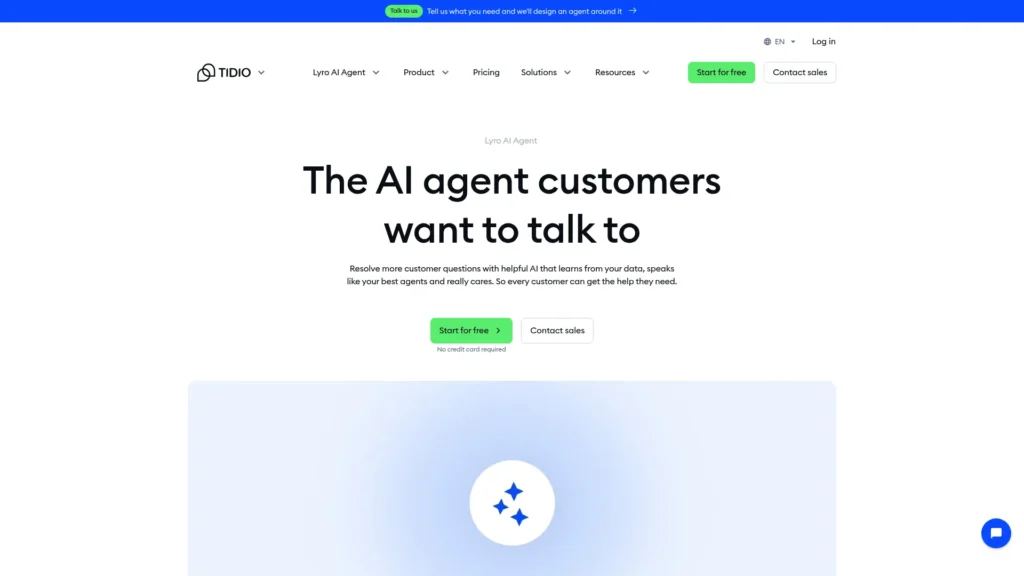
A website enquiry that sits unanswered for a few hours is a lead that often books with someone else instead. Tidio’s live chat, paired with its Lyro AI agent, answers common questions and qualifies visitors automatically outside business hours, then hands genuinely interested leads to an agent to follow up.
Best for: answering website enquiries and qualifying leads before an agent gets involved. Starting price: the Starter plan runs $29/month billed monthly (about $24.17/month billed annually) for the live chat platform; Tidio AI’s Lyro agent is metered separately, with the first 50 AI conversations free on any account and paid AI usage starting around $32.50/month for the next tier up. Free option: yes — the free plan includes 50 live chat conversations and 50 Lyro AI conversations a month, enough to trial the concept. Limitation: the pricing is genuinely two separate meters (chat plan plus AI usage), so a small agency’s real monthly cost is usually higher than the advertised Starter price once AI volume grows.
Agency-Specific AI & Automation
narvika
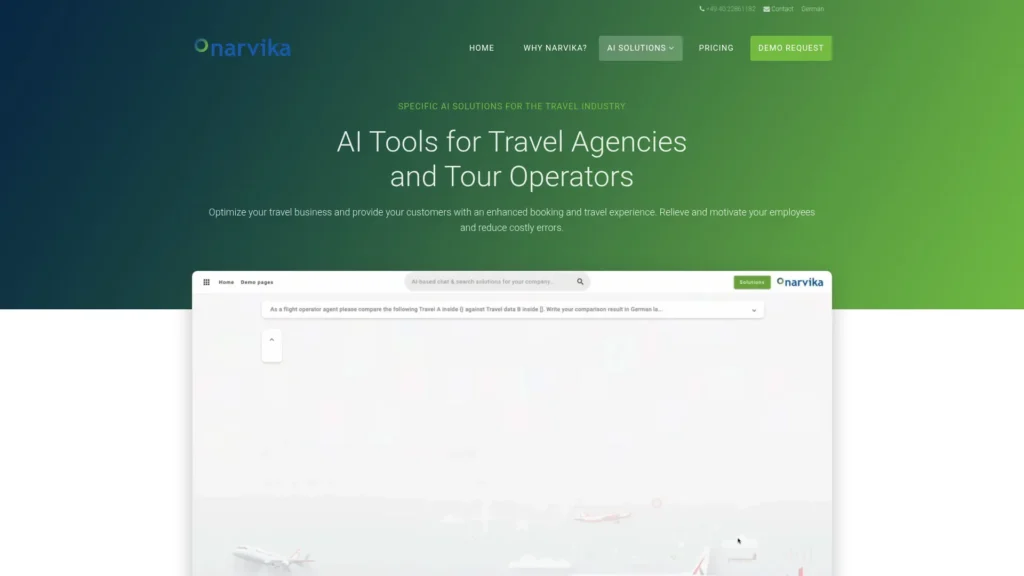
narvika builds AI assistants specifically for travel agencies and tour operators, focused less on planning trips and more on the operational checking that surrounds a booking: verifying that a flight itinerary’s connections and transfer times are actually feasible, and catching inconsistencies in booking data before they become an expensive mistake.
Its free, self-installation tier includes pre-built AI chatbots for the travel industry along with an intranet-style homepage for internal use. Beyond that, narvika offers paid AI training and workshops for staff, and an enterprise tier that lets an agency’s AI assistant “chat with” internal company content and documentation under stricter data-protection controls, running on cloud or on-premises infrastructure.
Best for: agencies wanting AI specifically built for travel-industry booking checks and internal operational automation, rather than general-purpose planning. Starting price: free for the self-installation entry tier. Free option: yes. Limitation: narvika is narrower and more operationally focused than a general planning or CRM tool — it’s a fit for agencies with a specific data-checking or internal-knowledge problem to solve, not a first purchase for a solo advisor.
Choosing Tools by Workflow Stage
Client consultation and requirements gathering: Otter.ai captures the call accurately so nothing gets lost between the conversation and the itinerary.
Building the first itinerary draft: Layla AI or Mindtrip for speed, with Tripadvisor AI as a sanity check on whether the recommendations still hold up against current traveler experience. mTrip fits here too, at the agency level, when the itinerary needs to come from booking data rather than a blank prompt.
Client-ready delivery: mTrip for agencies that want a branded app, web portal, and PDF delivered from one system; Canva AI when a polished document is enough without the full agency platform.
Research and writing around the trip: ChatGPT for proposal emails, destination content, and gap-filling research that the planning tools don’t cover.
Marketing and staying visible: Canva AI for the visual content, paired with whatever social scheduling tool an agency already uses.
Lead capture and website enquiries: Tidio AI answers and qualifies visitors before they go cold, especially outside business hours.
CRM and repeat-client follow-up: HubSpot AI for organized, ongoing communication with past clients — this is usually the highest-leverage tool for referral-dependent independent advisors specifically.
Agency-wide automation and booking checks: narvika for agencies with recurring data-verification needs across a team, rather than a single advisor’s workflow.
Most independent advisors end up running three or four of these — a planning tool, ChatGPT, a CRM, and a design tool — rather than all ten. Agencies with multiple agents on staff are more likely to add mTrip and narvika for the branding and operational-consistency benefits that only make sense at team scale.
Where AI Helps, and Where Agent Judgment Still Matters
AI tools are genuinely good at producing a reasonable structural skeleton quickly, surfacing popular attractions and restaurants, and handling simple, low-complication trips with few special requirements. For a straightforward weekend trip, that alone might be enough for some travelers.
What these tools consistently miss: a specific hotel that’s been under construction for months despite glowing older reviews, a tour operator with a habit of cancelling without notice, the judgment call needed to negotiate a genuine upgrade, and the ability to read between the lines when a client says they want “something relaxing” but means something more specific they haven’t articulated yet. None of the tools in this guide replace that — they remove repetitive production work that surrounds it, which is a meaningfully different thing.
For complex or high-stakes trips, a professional travel advisor can add value through supplier relationships, destination knowledge, disruption support, and judgment that itinerary generators do not provide.
Frequently Asked Questions
What are the best AI tools for travel agents? There isn’t a single best tool — it depends on which part of the workflow needs help. Layla AI or Mindtrip for fast itinerary drafts, ChatGPT for research and writing, Otter.ai for consultation calls, Canva AI for client-facing documents, and HubSpot AI for CRM and follow-up cover most of an independent advisor’s needs; agencies add mTrip and narvika for branded delivery and operational automation at team scale.
How can travel agents use AI? Across the full booking lifecycle: capturing client requirements accurately during the consultation, generating a first-draft itinerary instead of starting from a blank document, drafting proposal emails and destination content, producing branded client-facing documents, answering website enquiries automatically, and staying in touch with past clients for repeat business.
What is the best AI tool for creating travel itineraries? Layla AI for the fastest first draft from a simple prompt, Mindtrip if the client wants to collaborate on that draft in real time, and mTrip for agencies that need the itinerary to come from actual booking data and go out under their own brand.
Can AI help travel advisors with client proposals? Yes. Canva AI handles the branded visual document, and ChatGPT drafts the persuasive email and narrative content that accompanies it. Neither replaces the itinerary judgment behind a strong proposal — they speed up producing it.
Are there free AI tools for travel agents? Several of the tools here have a genuinely usable free tier: Layla AI and Mindtrip are free to use, Tripadvisor’s AI assistant is free with no account required, ChatGPT’s free tier covers most writing and research needs, and Tidio and narvika both offer functional free entry tiers.
Can AI replace a professional travel agent? AI can automate parts of travel planning, but it does not replicate every part of a professional travel advisor’s role. AI tools are genuinely capable of assembling a structural itinerary and answering routine questions quickly, which covers the simplest, most price-sensitive trips well enough for some travelers. What AI doesn’t replace is supplier relationships that produce real upgrades, the judgment to handle a booking that’s gone wrong mid-trip, and the kind of firsthand destination knowledge that comes from having actually stayed somewhere.
Conclusion
There’s no single winner here, because the right starting point depends on where an agent’s own process is slowest. If consultation notes are getting lost, start with Otter.ai. If the blank page is the bottleneck, start with Layla AI or Mindtrip. If past clients are falling out of touch, HubSpot AI closes that gap. Agencies running multiple agents get the most out of mTrip and narvika, which don’t make much sense for a single advisor working alone.
Add tools as a specific, felt bottleneck shows up in the workflow, rather than adopting all ten at once. The goal isn’t replacing the judgment, relationships, and problem-solving that clients actually pay a travel agent for — it’s freeing up more time to spend on exactly that.
For more independent AI tool reviews across travel, business, and professional categories, visit aitoolister.com.
Keep Exploring